



PVC Film Slitting Machine Selection Guide
A PVC film Slitting Machine is a special factory tool that cuts big rolls of soft plastic film into exact, smaller rolls. This machine is very important for preparing materials used in flexible packaging films and industrial rolls. You need to look closely at a few key features before you pick your equipment:
-
Material stretchiness and thickness limits
-
Blade selection and cutting mechanisms
-
Web tension control performance
-
Rewinder structural types for finished rolls
As a top company in cutting equipment, Sanhui Machinery makes accurate tools for your business. Our slitting Rewinding Machine technology removes film flaws, fixes slow work steps, and makes cutting more exact for your active production lines.
Key Takeaways
-
Sanhui Machinery makes exact cutting tools that get rid of film defects and raise daily factory production.
-
Picking the correct cutting technique prevents material waste and keeps your blades from wearing out quickly.
-
Powered electric bars wipe away static electricity so that moving plastic sheets stay straight at high speeds.
-
Closed-loop tension control systems keep soft plastic film from stretching out of shape while it is being cut.
-
Differential friction shafts balance the pulling strength on every roll to solve uneven material thickness problems.
-
Dual turret rewinding systems boost product creation by letting the main motor run while you swap rolls.
-
Motor-driven automatic blade placement reduces prep time by forty percent and removes human line-up mistakes.
-
Testing the machine at the factory with your own PVC materials ensures it works correctly before you buy it.
Key Factors in Choosing a PVC Film Slitting Machine
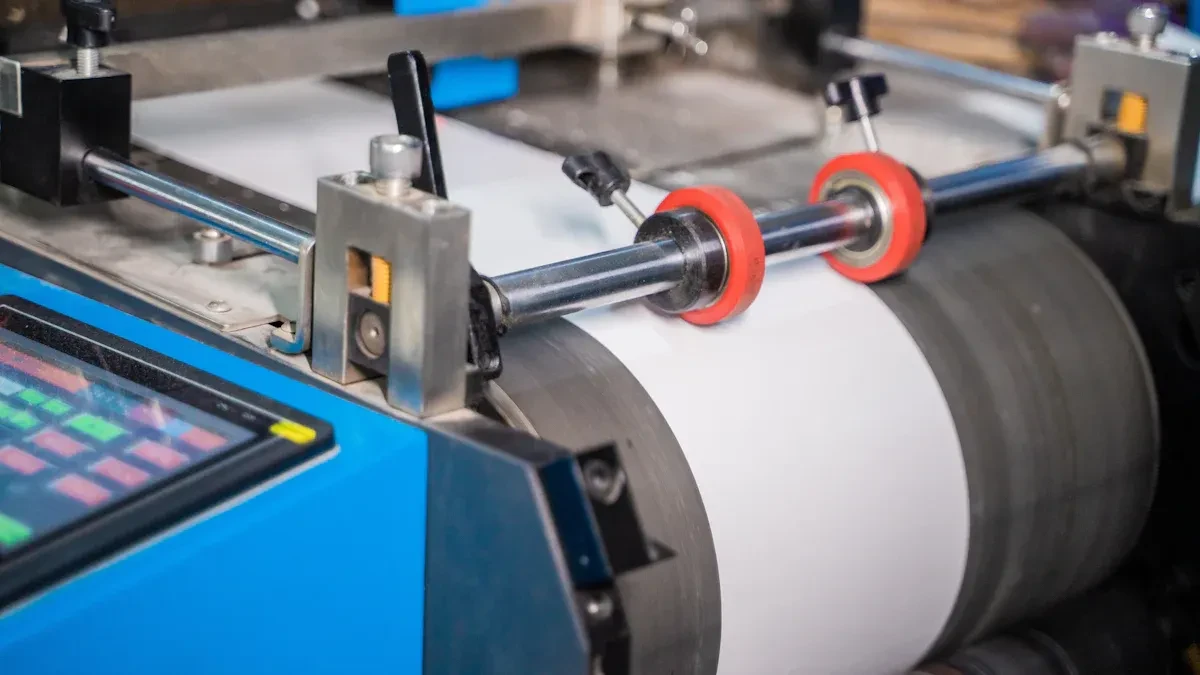
Picking the right pvc film slitting machine starts with knowing how your material acts. Polyvinyl chloride (PVC) is harder to process than basic plastics like PET or OPP. You must check key machine features to stop product flaws and cutting problems on your line.
Physical Properties of Rigid and Flexible PVC
Plasticizer Migration and Surface Tackiness
Flexible PVC uses liquid additives named plasticizers to stay soft. These liquids slowly move to the surface over time and make the film sticky. This sticky layer makes layers cling together on the main roll. Unrolling sticky flexible PVC creates high friction that slows down your process. Regular cutting blades also get gummed up by sticky residue during long jobs.
You must wipe down cutter blades often to keep your cuts clean. This sticky surface also causes sudden tension jumps as the film leaves the unwind stand. Smooth web paths keep flexible film moving well without any tearing.
Gauge Variation and Tensile Limits
PVC rolls often have noticeable thickness changes across the width of the film. Soft film stretches under heavy tension, but hard PVC cracks under sharp stress. These thickness shifts create uneven tension spots across your material as it moves.
Smart tension control systems from Sanhui Machinery keep film feeding evenly despite changing thickness. Constant tension control stops thin spots from stretching out of shape. It also keeps thick areas from creating loose edges during fast runs.
Static Control in High-Speed Processing
Active Ionizing Bars and Blowers
Fast machine movement builds up strong static electricity on plastic materials. Static forces the plastic film to stick to rollers and frame parts. This static build-up leads to film cling and rough edge shapes during long runs.
Active ionizing bars clear out electrical charges right on the moving film. Air blowers push ionized air into tight spaces to remove hidden static pockets. Clearing static keeps the web moving smoothly through all parts of your machine. Removing static also stops cut strips from weaving out of line before rewinding.
Thermal Management at Cutting Edges
Heat Dissipation and Edge Fusion Prevention
Friction between fast blades and the PVC film creates high heat at the cut line. PVC film burns and melts very easily when heated up. Too much heat softens the cut plastic, which makes neighboring strips stick together on the rewinder.
Good heat removal methods protect your film quality during high-speed cutting jobs. You should pick sharp tools and proper blade angles to cut down on friction. Proper edge cooling keeps your cut lines clean and smooth through the whole run. Clean edges make sure your finished rolls unwind easily for your packaging customers.
Selecting Slitting Methods for Flexible Packaging Film
You must choose the right cutting method to achieve clean edges and stable roll geometry. Substrate thickness, material rigidity, and desired edge finish dictate the best cutting technique for your film rolls. Scissor shear slitting works best for dense, rigid plastic rolls. Razor blade slitting processes thin, highly pliable webs cleanly. Rotary score slitting handles thick industrial substrates that resist standard knife setups. Selecting the wrong cutting method increases scrap rates, causes edge defects, and accelerates tool wear across your plant floor.
|
Cutting Method |
Substrate Suitability |
Slit Edge Quality |
Tooling Setup |
|---|---|---|---|
|
Shear Slitting |
Rigid PVC and thick films |
High precision, burr-free |
Scissor engagement alignment |
|
Razor Slitting |
Smooth, clean cut |
Simple blade holder mounting |
|
|
Score Slitting |
Heavy industrial PVC sheets |
Compressed, firm edge |
Radial pressure against anvil |
Shear Slitting Mechanics for Rigid PVC
Rigid PVC requires scissor-like mechanical force to shear through dense film layers without cracking the web material. Shear slitting uses two circular metal knives that meet at a precise intersection point during continuous machine operation.
Male and Female Knife Alignment
You must adjust the overlap depth and side pressure between the top male knife and bottom female knife ring. The top circular blade clips against the ground edge of the lower knife ring at a specific shear angle. Incorrect blade clearance generates high friction, accelerates edge wear, or lets plastic film slip between the cutting surfaces. Correct knife alignment maintains constant point contact to guarantee clean web separation during every fast slitting process.
Edge Quality and Slag Minimization
Precise shear mechanical action cuts rigid PVC without creating fine plastic dust or rough slag along roll shoulders. Smooth edge boundaries keep rigid plastic sheets from cracking when operators handle or unwind finished rolls. You protect sensitive downstream converting tools from micro-particle contamination by eliminating loose edge fragments during cutting. Cleanly sheared edges preserve uniform roll width tolerances across your entire master roll batch.
Razor Blade Systems for Flexible Film
Soft PVC flexible packaging film responds best to sharp razor blade systems. Razor cutting offers a straightforward mechanical configuration that pierces thin plastic webs cleanly while keeping your equipment capital investments manageable.
Razor-in-Groove vs Razor-in-Air Methods
You can position slitting blades using the razor-in-air technique or the razor-in-groove technique. Razor-in-air holds the stationary blade edge inside an open gap along the material web path. This arrangement allows rapid job changes, but web vibration can reduce overall cutting precision on flexible materials. Razor-in-groove places the razor blade tip inside a matching slot on a grooved support roller. The solid metal channel supports the plastic web during the slitting process, which eliminates film flutter and preserves exact cut alignment.
Downstream flexible packaging film equipment requires smooth web edges to prevent web breaks during high-speed converting. You avoid ragged edge imperfections by selecting supported blade mounting methods:
-
Clean, burr-free edges eliminate stress concentration points that cause material tearing during pouch forming and vertical liquid filling operations.
-
Removing edge burrs stops feathered film borders, which maintains complete seal integrity when packages experience shipping stress.
-
Smooth roll edges prevent unexpected machine stops on automated form-fill-seal equipment by ensuring smooth material unrolling.
Blade Wear and Replacement Protocols
Continuous friction against tough plastic webs dulls sharp razor edges over long production runs. Dull blades stretch film edges, increase material drag, create rough burrs, and generate unwanted heat. You must inspect blade sharpness regularly and follow strict replacement schedules to protect product quality. Timely blade changes keep your replacement blade cost low while maintaining superior edge quality across high-volume jobs.
Rotary Score and Crush Cutting Applications
Heavy industrial plastic films demand durable, heavy-duty mechanical cutting systems. Score slitting presses a hardened steel knife wheel against a solid anvil roll to crush through tough substrates.
Heavy Duty Industrial PVC Converting
You can use rotary score cutting when converting thick industrial PVC products that damage standard shear blades. The heavy circular knife applies concentrated downward pressure to break through dense polymer layers quickly. While crush cutting creates more edge deformation than scissor shear methods, it simplifies knife positioning across wide machine frames on heavy-duty slitting equipment.
You achieve lower tooling setup cost by mounting quick-adjust rotary score assemblies across wide web spans. However, operator precision remains essential during every score slitting process. Maintaining proper pneumatic knife pressure prevents surface damage to anvil rolls and guarantees consistent slit roll quality throughout your processing plant.
Tension Control and Web Guiding Systems
Managing web tension stops soft plastic films from stretching during daily production runs. Flexible PVC needs careful handling at every step of your operation. Unchecked changes in roll size will cause loose layers, wrinkles, and film damage. Reliable tension control tools keep your material moving smoothly from start to finish.
Closed-Loop Tension Control Systems
Load Cells and Automatic PID Adjustment
Closed-loop control setups measure film pull constantly during fast production runs. Sensitive load cells pick up small pressure shifts along the material path. These electronic sensors feed real-time measurement data directly to a central controller.
The system uses automatic PID math to change drive motor torque right away. This quick adjustment keeps film pull balanced while unwind rolls shrink down. Modern cutting equipment built by Sanhui Machinery includes a full-automatic closed-loop tension system. This smart technology keeps running conditions stable at changing speeds, keeping rewinding end face flatness within ≤0.5mm.
Tension Component | Operational Function
Load Cells | Measure physical film tension continuously in real time
PID Controller | Calculate torque changes for all drive motors
Edge Sensors | Track sideways film movement to stop material drift
Web Guiding and EPC Edge Correction
Ultrasonic and Photoelectric Edge Sensors
Edge guiding tools move your material through the machine frame safely. An EPC edge correction unit stops off-center running by making small path adjustments.
Photoelectric sensors check solid materials, while ultrasonic sensors track clear PVC films easily. These touch-free sensors spot sideways film shifts right away. The main guide shifts the unwind stand side-to-side to realign your moving film. Proper alignment stops tracking errors right before your material reaches the blades.
Rewind Shaft Technology for Uniform Rolls
Differential Friction Shafts for Gauge Compensation
Master rolls often show small thickness changes across their total width. Basic solid shafts create uneven pull on separate cut rolls during big jobs. Thick film areas wind very tight, while thin sections stay loose and slide sideways.
Differential friction shafts fix rewind tightness issues across uneven webs by letting individual cores slip.
The friction rings turn separately to balance steady winding force across all roll positions. This smart system fixes thickness changes during your continuous cutting run. Because of this, every cut roll keeps matching firmness and clean side edges.
Air Expanding Shafts for Master Rolls
Air expanding shafts give strong inside grip for smooth master roll unrolling tasks. Internal air bags push metal keys against core walls to hold heavy film rolls. This strong mechanical hold stops core slipping during quick starts and hard stops.
Choosing correct shafts protects paper core shapes and helps your rewinding work run fast. These strong features improve total equipment output while lowering scrap levels during big slitting jobs.
Machine Architecture of a Slitting Rewinding Machine
You must select the structural framework of your slitting rewinding machine based on your plant floor layout and yield goals. Structural engineering directly influences how well your equipment absorbs vibrations during fast runs. Compact vertical models save valuable floor space in smaller facilities. Small packaging converters prefer vertical designs for short jobs and fast material changes. High-output horizontal structures offer superior stability for continuous industrial processing. Heavy steel frames handle wide plastic rolls at top speeds without flexing or weaving. You protect finished roll quality and knife longevity by choosing a rigid machine frame.
Duplex Center-Surface Slitter Rewinders
Duplex center-surface machines combine web driving methods for precise material control across flexible substrates. Surface rollers drive the outer layer of the material with constant nip pressure. Center drive motors turn the dual rewind shafts directly to maintain accurate torque balance. This combined drive system prevents plastic film slipping during the main rewinding phase. You avoid heat buildup and material stretching when processing delicate synthetic webs. Operators maintain uniform roll density and clean side profiles on soft plastic substrates across extended factory runs.
Operational Speed and Roll Diameter Limits
High-speed center-surface winders process elastic plastic films reliably without breaking the moving web. Sanhui Machinery builds specialized slitting equipment that reaches top running speeds up to 800 m/min. Standard slitting rewinding machine setups drive materials safely at speeds up to 350 m/min or 400 m/min depending on model parameters. Heavy-duty machine frames handle large master unwind diameters up to 1400 mm or 1600 mm. Finished rewinding shafts support large finished roll diameters up to 800 mm or 1200 mm. You maintain precise web control across every single phase of the continuous slitting process.
Dual Turret Rewinding Infrastructure
Dual turret systems maximize continuous material output on high-volume production lines. A rotating indexing head holds multiple rewind shafts in a balanced circular pattern. One shaft handles active rewinding tasks while your operator preps fresh paper cores on the secondary shaft. The machine indexes 180 degrees automatically when the current roll reaches its target length. This quick rotation brings the empty core shaft into the web path immediately. You keep the main machine drive running continuously without stopping your upstream processing workflow.
High-Throughput Unloading and Cycle Times
Turret-style slitting rewinding machine configurations shorten downtime between finished master rolls significantly. Standard manual roll changes force long machine stops and require manual core loading. Automatic end cutting, tab application, and shaft indexing remove unnecessary operational delays across every shift cycle.
-
The dual-station turret rotates 180 degrees to move finished film rolls away from the active winding position.
-
The mechanical cross-cutting unit severs the film tail cleanly while attaching the fresh edge to ready cores.
-
The operator unloads finished rolls safely from the idle station without stopping the ongoing slitting process. Dual turret configurations out-produce traditional duplex units by 200% to 300%. This continuous motion maximizes your daily production capacity while cutting labor requirements.
Technical Specification Comparison Matrix
You must evaluate machinery specifications carefully to match your plant requirements and output targets. Slitting models vary by web width range, operating speed, and physical roll weight limits.
|
Machine Model |
Max Unwind Diameter |
Max Rewind Diameter |
Min Slit Width |
Max Running Speed |
Slitting Accuracy |
|---|---|---|---|---|---|
|
LBFQ-1100 |
1400 mm |
800 mm |
5 mm |
≤350 m/min |
±0.2 mm |
|
LBFQ-1300 |
1400 mm |
800 mm |
5 mm |
≤350 m/min |
±0.2 mm |
|
LBFQ-1600 |
1400 mm |
800 mm |
8 mm |
≤350 m/min |
±0.2 mm |
|
High-Speed Series |
Up to 1600 mm |
Up to 1200 mm |
10 mm |
Up to 800 m/min |
±0.1 mm |
Unwind/Rewind Diameters and Minimum Slit Widths
Unwind and rewind specifications dictate what product ranges you can manufacture efficiently for your customers. Sanhui Machinery designs custom hardware to handle diverse substrate sizes and heavy industrial roll weights. Specialized spooling winders achieve extreme narrow cuts down to 5 mm or 8 mm for unique narrow-web converting applications. High-precision center winders slice plastic materials cleanly down to a 10 mm minimum slit width for standard commercial packaging runs. Sanhui Machinery builds high-performance features into every model to eliminate web tracking errors. Their custom engineering solutions provide extraordinary slitting accuracy of ±0.1 mm across all operating speeds. Choosing a modern pvc film slitting machine with proper physical dimensions optimizes your total factory performance.
Automation Features and Sanhui Machinery Solutions
Automated Blade Positioning Technology
Servo-Driven Automatic Knife Setups
Modern slitting machines use top automation features to upgrade your factory floor. Setting up blades by hand takes too long and causes costly mistakes. Sanhui Machinery uses servo-controlled systems to position your blades automatically. These strong knife units process film thickness from 10 to 500 microns with high stability. Digital alignment tools keep blade accuracy below ±0.1 mm during rapid moves.
Servo-driven cutting systems reach accurate placement precision within ±0.15 mm. This tool lowers manual setup time by 40% and cuts manual fixes by 43%. Closed-loop tension tools keep film pull changes under 1% during long runs. Automatic knife setups remove manual positioning work completely. You get accurate cut widths on every shift without stopping your running line.
PLC Touch Screen Controls and HMI Integration
Recipe Storage and Real-Time Diagnostics
Simple control systems make hard cutting tasks easy to run. You use a main PLC touch screen to manage your machine. The screen saves exact film settings, knife locations, and tension levels for quick jobs. Operators open saved profiles fast to change jobs without measuring parts by hand. This digital panel keeps drive motors and web guides working together smoothly.
Live diagnostic screens show current running speeds, heat levels, and web tension data. The system warns your team fast when sensors spot tracking shifts or bad settings. You change running numbers right away to stop film damage during main cutting runs. Saving job settings makes training new operators much easier. Easy screen controls keep product quality steady across every work shift.
Automatic Roll Handling and Discharge
Robotic Unloading Arms and Core Loading
Big rolls need strong machine help during loading and unloading tasks. Custom equipment from Sanhui Machinery cuts setup downtime by 120%-130% using auto roll loading and auto blade alignment. Robotic unloading arms hold heavy finished rolls safely after rewinding finishes. Laser guide tools help workers load fresh paper cores onto rewind shafts fast. This smooth process removes hard physical work and protects operators from lifting dangers.
Custom machinery from Sanhui Machinery speeds up your total rewinding output. Automatic discharge tools push finished rolls onto hydraulic trees for fast moving. You keep your high-speed slitting rewinding machine running fast without long stops. Smart automation tools cost more money upfront, but saved downtime quickly pays back the machinery price. Buying efficient automation increases total output while keeping your roll edges clean.
Investment Evaluation and Final Decision Framework
Buying a pvc film slitting machine requires a clear financial plan. You must look beyond the initial purchase price to understand true long-term value.
Total Cost of Ownership and ROI Factors
Your initial machinery acquisition cost represents only a fraction of total life cycle expenses. Operating expenses accumulate through daily power use, labor needs, and regular knife maintenance. Investing in premium slitting equipment reduces these ongoing factory costs by improving daily working efficiency. High-performance machines lower labor reliance through smart controls, which protects your operational budget over time.
Waste Reduction and Scrap Rate Metrics
Material scrap directly increases your total production cost. Inconsistent tension control stretches film webs and ruins valuable master rolls. Reliable machinery prevents raw edge deformation and limits rejected finished goods. You calculate daily material efficiency by dividing good output roll volume by total raw web input volume:
yield = good units / total units x 100
Lowering scrap rates by even a small percentage yields fast financial payback across high-volume production schedules.
Manufacturer Capabilities and Service Support
Machine durability depends on strong physical construction. Heavy steel machinery frames absorb severe motor vibrations during continuous fast operation. Stable base frames protect delicate knife sets and maintain tight alignment across wide spans. This structural stability preserves product quality while expanding total plant processing capacity.
Frame Rigidity and Spare Parts Availability
You need reliable technical support to keep your plant floor running smoothly. Sanhui Machinery provides a comprehensive 1-year warranty for the machine and a 2-year warranty for core components. Their engineering team offers 24/7 technical support, with home visits arranged within 48 hours for urgent equipment issues. Fast spare parts delivery prevents extended downtime and protects your total production cost.
Choosing a high-performance slitting rewinding machine gives your plant a strong foundation for future growth.
Final Purchasing and Trial Run Checklist
Before signing a final purchase agreement, you should check all machine performance claims. Verifying technical specifications ensures the hardware matches your exact plant needs.
Factory Acceptance Testing with Native PVC Substrates
You must demand rigorous factory acceptance testing using your actual PVC substrates. Standard material tests cannot duplicate the plasticizer behavior or tackiness of your specific web rolls. During trial runs, operators must observe material behavior across the full slitting process.
-
Confirm precise material feeding across all processing speeds.
-
Verify active static control systems during rapid material movement.
-
Inspect edge quality to prevent edge fusion during rewinding operations.
You should measure final roll quality carefully after completing test runs. High-quality rewinding systems keep end face flatness within ≤0.5mm while achieving a slitting accuracy of ±0.1mm. Confirming these target metrics guarantees your machinery delivers excellent performance for years.
Choosing the right pvc film slitting machine requires clear evaluation steps. You must match physical PVC substrate properties with sharp cutting tools. Proper razor or shear blades deliver smooth edge quality on every flexible packaging film roll. Precise web tension controls prevent film stretching during continuous processing operations.
Selecting an optimal machine structure secures uniform finished roll performance. Wenzhou Sanhui Machinery Manufacturing Co., Ltd. builds high-precision equipment tailored to your exact production goals. Their custom-engineered slitting rewinding machine designs eliminate web defects and boost daily plant output.
Contact Sanhui Machinery at 86-15157748066 or sanhui.slittingmachine@gmail.com today. Request your technical consultation and schedule native film trial testing for your facility.
FAQ
What is the maximum speed of a Sanhui Machinery slitting machine?
High-speed models reach speeds of 800 m/min. Standard types run at 200 m/min or 400 m/min. Run machines at 70% to 80% speed to keep materials smooth and steady.
What slitting accuracy can you achieve on PVC film?
You can get a sharp slitting accuracy of ±0.1mm on plastic films. The machine keeps rewinding end face flatness within ≤0.5mm. These exact measurements stop material waste and yield matching rolls all day.
How much more does an auto roll change slitter cost compared to standard models?
An auto roll change slitter costs 120% to 130% more than basic units. Yet, this technology cuts setup downtime quickly and raises your total daily working output.
What key features ensure constant web tension control during operation?
Tools like full-automatic closed-loop tension control systems and EPC edge correction devices keep web tension steady. These setups stop film wrinkles, stretched plastic, and side drift during fast jobs.
What are the physical roll dimensions for converting operations?
You can slit plastic down to a minimum slitting width of 10mm. Machinery takes unwinding roll diameters from 800mm to 1600mm and rewinding roll diameters from 600mm to 1200mm based on your chosen design.
What warranty support does Sanhui Machinery provide for new equipment?
Sanhui Machinery gives a 1-year warranty for the whole machine. You also get a 2-year warranty for all main core components. Their service team offers 24/7 online help and plans factory site visits within 48 hours.


