PE Film Slitting Machine Guide for High Speed Packaging Applications
When you pick a pe film Slitting Machine for stretchy materials, check its tension control, blade shape, and frame strength. Poorly set equipment causes bad stretching, thinning, and heat damage. These running problems quickly ruin your finished rolls during fast rewinding processes. You need steady, continuous tension to keep your plastic film from spoiling. This detailed slitting machine guide helps you improve high-speed film slitting for tough flexible packaging jobs. Sanhui Machinery leads the industry by making advanced film slitting machine options designed for flexible packaging film. You can avoid material flaws and boost your total packaging production with the right slitting setups.
Key Takeaways
-
Steady tension control prevents plastic film from stretching, thinning, and breaking during fast machine runs.
-
Smart closed-loop tension systems instantly change shaft speeds to keep delicate film from ripping.
-
Lightweight aluminum and carbon fiber rollers stop surface drag and prevent plastic film slipping.
-
Grooved roller bars help razor blades make smooth, neat cuts on thin plastic sheets.
-
Air cooling systems blow chilly air onto blades so heat from rubbing does not melt the cut edges.
-
Differential friction shafts maintain smooth rewinding quality when working with films of different thicknesses.
-
Automatic edge position sensors track clear plastic films continuously to keep alignment straight.
-
Strong machine frames cut down on shaking, which lets the equipment slice smoothly at non-stop speeds reaching up to 800 meters every minute.
PE Film Slitting Machine Challenges in Flexible Packaging
In flexible packaging, material processing requires strict precision. Stiff materials keep their shape well under pull forces. However, pe films stretch easily as you pull them through machinery. Primary slitting operations handle wide master rolls over 2.5 meters in width. Packaging converters use secondary slitting steps to make narrow rolls for making pouches and wrapping products.
Managing Web Elasticity and Necking at High Speeds
Elastic Deformation Behaviors of LDPE and LLDPE Formulations
Low-density polyethylene (LDPE) and linear low-density polyethylene (LLDPE) show high stretchiness. These plastic structures stretch even under light pull forces. Uncontrolled tension changes make the material narrow down during slitting. This narrowing shrinks the web width before reaching the knives. As a result, packaging workers deal with uneven roll edges.
Dynamic Web Tension Thresholds to Prevent Material Stretching
You must keep pull forces below the stretch limit of the plastic film. Fast speed increases create force spikes during machine startup. Too much tension stretches thin layers permanently. Careful force control keeps web width steady and protects downstream print alignment.
Overcoming Thermal Softening and Friction Heat Build Up
Blade Friction Heat Generation at High Line Speeds
Fast machine speeds create heavy friction between moving film webs and fixed knife edges. This constant rubbing creates hot spots in small areas. Polyethylene melts at low temperatures. Trapped heat softens web edges during fast operations.
Thermal Effects on PE Film Edge Fusion and Quality
Friction heat makes cut strip edges melt together. These softened edges stick on the rewind shafts. Workers struggle to separate the cut rolls cleanly. Heat damage also creates rough cut edges. Poor edge quality ruins total rewind results during fast film slitting.
Caliper Variations in Single Layer and Laminated Films
Impact of Film Thickness Fluctuation on Roll Hardness
Making plastic film leaves natural thickness changes across wide master rolls. Single-layer webs and laminated film structures show these thickness differences. Thicker sections create larger roll diameters on the rewind shaft. Thinner sections wrap loosely under the same turning force. These diameter differences cause uneven tension inside the film roll.
Mitigating High Spots and Gauge Banding during Rewinding
Thickness bands warp final roll shapes during continuous rewinding operations. High spots take on too much winding pressure while low spots create loose areas. Tight winding areas make the film stretch over time. You must balance pull forces across every separate strip. Proper tension control improves final rewind quality and protects flexible packaging film integrity. Buying a high-performance pe film slitting machine helps packaging converters work with tough flexible packaging materials, keep accurate roll shapes, master every slitting run, increase daily output, and improve plant operations.
Selecting the Right Slitting Equipment for Tension Control
Finding good slitting machinery means focusing on how it handles running plastic. Sanhui Machinery builds smart slitting tools with automated, closed-loop tension systems. This helpful setup keeps materials moving smoothly without stretching them out of shape. Accurate pull adjustments stop torn webs and ugly wrinkles when the machine quickly speeds up or slows down.
Closed Loop Tension Systems with Low Inertia Rollers
Load Cell Integration for Real Time Feedback Control
Special sensors track the real pull force of the moving film loop constantly. Motor drives get quick force updates right from these smart load sensors. This fast control loop holds stable tension across the entire machine path.
Good force control gives steady support during non-stop, fast production runs. The automated system changes shaft speeds right away. This fast action keeps fragile plastic wraps safe from stretching while keeping pull forces steady.
Aluminum and Carbon Fiber Low Inertia Guide Rollers
Heavy steel rolls put bad drag on thin plastic materials. You should pick light guide rolls built from carbon fiber or light aluminum. These smooth parts lower rotating weight along the whole web path.
Lightweight rollers spin easily with very little surface drag. They stop your plastic from slipping over roller tops. You protect total web control when machine speeds change without warning.
Pneumatic Dancer Arm Systems vs Solid State Load Cells
Frictionless Pneumatic Dancers for Dynamic Shock Absorption
Air-powered dancer arms absorb hard bumps during the initial roll unwinding steps. Floating dancer arms cushion quick force spikes coming off large main supply rolls. This mechanical motion offers smooth web protection.
Dancer arms work great on main supply rolls that are uneven. Smooth air cylinders hold steady force on the moving film loop. This gentle cushion protects the plastic web during continuous cutting tasks.
High Speed Tension Response Times in Advanced Slitters
Solid-state sensors react much faster than old dancer arms during high-speed film runs.
|
Parameter |
Load Cell Control |
Dancer Arm Control |
|---|---|---|
|
Mechanical Travel |
~0.005 inches (0.127 mm) |
1–4 inches typical |
|
Natural Frequency |
Tens of Hz |
Fractions of a Hz |
|
Mechanical Filtering |
None (no damping) |
High (inherent damping) |
The DFE tension control system does not require the dampening that a dancer system does. Shocks and surges in the web are not a problem because the system responds accurately and tracks speed and tension closely.
Modern slitting machines use these fast sensors to guard delicate web edges. Solid-state devices send instant updates to make your whole film cutting run smoother.
Blade Selection for Flexible Packaging Film Slitting
You can get clean edges without wrinkles by using high-precision knife sets. Sanhui Machinery builds machines that deliver very accurate cutting results. Picking the best blade setup improves your overall work performance every single day.
Razor in Air vs Razor in Groove Slitting
Deflection Risks of Unsupported Thin Gauge PE Webs
Cutting unsupported plastic in midair works well for soft materials. But thin sheets bend easily when blades hit the moving film. This bending causes uneven widths and ruins your clean cut across the run.
Soft plastic layers shift sideways without hard support under high pull forces. Shaking blades stretch fragile edges during fast factory runs. You get crooked strip edges when working on thin material without solid backing.
Grooved Support Rollers for Enhanced Edge Precision
Rollers with cut slots offer strong backing for moving flexible sheets. The small groove guides the razor blade right through every single cut. This backing stops material stretching and sliding while the machine cuts.
You get very clean cuts by placing steel support right under the blade. The guided path stops web shaking during fast production runs. This setup gives great edge accuracy for thin film rolls.
Rotary Shear Slitting Systems for Thick Films
Male and Female Shear Blade Overlap and Geometry
Thicker materials need rotary shear setups instead of simple razor blades. You must match your cutting style to your total plastic thickness.
|
Slitting Method |
Maximum Film Thickness |
|---|---|
|
Razor Slitting |
Less than 0.05 mm |
|
Rotary Shear Slitting |
0.15 mm (applicable range 0.05–0.15 mm) |
Shear cutting uses top male blades that overlap bottom female knives. For films over 100 microns, set vertical overlap between 0.5 mm and 1.2 mm, or up to 2.0 mm for thick layers. Keep side clearance between 5% and 10% of total film thickness, like 5–10 microns for a 100-micron layer. Set blade side angles from 0.25° to 0.50° to stop rough edges.
Blade Coatings and Wear Resistance for High Speed Runs
Fast machine speeds wear down round steel knives very quickly. Tough surface coatings protect sharp cut edges from friction damage. Strong blade coatings keep edges sharp through long factory work shifts.
Sharp knife edges stop stretch lines on delicate plastic film strips. Good blades last much longer before needing replacement. You reduce repair stops and protect total finished roll quality.
Optimizing Slitting Geometry and Cooling Mechanisms
Slitting Angle Calibration to Eliminate Dust and Burrs
Proper knife setup stops loose plastic dust from forming on cut edges. Adjusting the entry angle gives you smooth cutting results on every roll. Correct blade angles split plastic sheets easily without tearing fibers.
Good blade angles keep pull forces smooth right at the cut point. Removing plastic dust keeps the film clean before final packaging steps. Smooth edge quality helps your flexible packaging tools run better.
Air Cooling Systems for High Speed Blade Temperature Control
Fast cutting creates friction heat right where blades touch moving plastic. High heat softens soft polyethylene edges during non-stop machine runs. Trapped heat makes cut strip edges melt together on rewind shafts.
Smart air systems blow cold air streams right onto hot blade edges. Compressed air removes hot friction heat fast during quick slitting runs. Cooling keeps film edges clean and improves total plant output.
Winding Systems and Differential Shafts in Sanhui Machinery Slitters
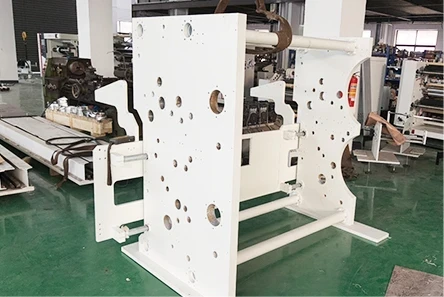
Sanhui Machinery builds high-capacity equipment for flexible packaging converters. Advanced machine models accommodate maximum rewinding diameters from 600mm to 1200mm. Sturdy structural designs support heavy roll load capacities without frame vibration. Selecting proper slitting equipment transforms your factory efficiency and output quality.
Center Winding vs Center Surface Combination Winding
Torque Transmission Dynamics in High Speed Center Rewinding
Center rewinding transfers torque directly through the central shaft. This mechanical drive works well for standard flexible materials. However, center-surface combination rewinding adds driven touch rollers against the roll surface. Surface contact maintains precise web speed during fast operations. Dual power transmission guards delicate film structures against stress during acceleration.
Surface Touch Rollers for Air Entrapment Elimination
Fast moving web layers drag a thin boundary layer of air into the roll. Pneumatic touch rolls press against the outer surface during rewinding. This physical pressure expels trapped air from between plastic layers. Calibrated touch roll forces prevent soft rolls, telescoping, and core collapse during transit.
Friction Ring Differential Shafts for Slip Control
Pneumatic Friction Rings for Independent Strip Tensioning
Sanhui Machinery integrates differential friction shaft technology into every slitter. Pneumatic friction rings slip independently to give each slit strip separate pull control. Variable air pressure adjusts friction instantly across the shaft length. Tight mechanical control guarantees rewinding end face flatness ≤0.5mm for every roll.
Compensating for Multi Strip Thickness Variations Across Wide Webs
Thickness variations across wide master rolls create uneven strip diameters. Standard solid shafts stretch tight sections while leaving thinner strips loose. Differential rings slip automatically to balance pull forces across every lane. Independent slip control prevents stretching while maintaining consistent rewinding quality across wide webs.
Programmable Lay On Rollers and Taper Tension
Pneumatic Lay On Roller Pressure Control Profiles
Programmable lay-on rollers control nip pressure during the slitting process. Precise air pressure adjustments maintain a uniform hardness profile from core to rim. Controlled pressure protects low-density polyethylene formulations from edge wrinkles. Excellent nip control boosts rewinding quality during high-speed runs.
-
Excessive lay-on pressure creates hard edge ridges.
-
Insufficient lay-on pressure causes edge feathering.
-
Moderate pressure maintains constant surface contact across every strip.
Taper Tension Curves for Large Diameter Rewind Rolls
Automatic systems apply a taper tension curve as roll diameter grows. Winding torque starts tight at the core and eases toward outer layers. Gradual force reduction stops internal layer buckling, core crushing, and dish shaping. Automated tension taper improves your total rewinding quality. Superior slitting control delivers consistent finished products for demanding rewinding operations.
Web Guiding and Quality Control for Film Slitting Machines
Edge Position Control and Centerline Tracking
Ultrasonic and Infrared Sensors for Clear PE Films
You need precise web guiding when processing clear plastic materials at fast line velocities. Sanhui Machinery equips each film slitting machine with an integrated EPC edge correction device directly on the unwind framework. This unit tracks material alignment constantly to prevent web deviation during fast operations. Ultrasonic and optical infrared sensors scan transparent material edges continuously without physical contact.
Clear plastic surfaces often reflect standard optical light beams unpredictably. Ultrasonic sensors send sound waves across material borders to detect physical thickness changes instantly. Infrared sensors measure optical contrast between moving web edges and background reference plates. These non-contact sensors maintain solid signal integrity despite transparent film clarity variations.
Fast Response Actuators for Edge Correction at High Speeds
Fast response electromechanical actuators move the unwind stand sideways instantly when sensors report position changes. This automatic alignment stops lateral weaving before the web reaches slitting knives. Proper alignment protects your final product edge straightness across long factory shifts.
Dynamic position adjustments keep material running straight during fast machine acceleration. The high-speed steering mechanism reacts immediately to main supply roll shifts. Continuous edge tracking ensures precise material feeding into your slitting equipment every single second.
Active Static Neutralization and Defect Inspection
Anti Static Ionizing Bars at Unwind and Rewind Stations
Fast running speeds generate heavy static charges on plastic web surfaces. Passive non-powered static bars fail when material speeds exceed 30 m/min or surface resistivity rises above 10^12 Ω/sq. Powered ionizing bars maintain effective static control during high-speed film slitting runs. Sanhui Machinery recommends dual-sided ionizers because chill rolls cause static buildup evenly across both sides of moving sheets.
Pulsed DC ionizers allow substrate-specific tuning without hardware replacement. You can adjust positive and negative ion outputs independently to match substrate polarity. Placing powered ionizing bars at unwind and rewinding stations yields measurable quality improvements.
Full layered static elimination reduces static-related winding scrap rates by 86.2% and downstream customer cosmetic rejection rates by 81.4%.
Automatic Online Defect Detection for Surface Quality
Maintaining high surface quality requires constant monitoring across every slitting run. Sanhui Machinery pairs each film slitting machine with specialized automatic Inspection Machines for continuous quality assurance. These systems identify pinholes, gels, surface scratches, and inclusions instantly.
Advanced inspection systems use transmission lighting and high-speed cameras to capture real-time images above moving plastic sheets.
-
SIMV film surface defect online detection systems trigger automatic alarms, display defect locations, and print per-roll test reports.
-
Intelgic Certainty AI systems map thickness uniformity while detecting pinholes and scratches.
-
ISRA VISION SMASH setups utilize self-learning QuickTeach functions to classify defects automatically and streamline roll grading during rewinding.
Evaluating Film Slitter Specifications and Machinery ROI
Choosing high-performance industrial equipment means looking at machine design and money returns. You should pick a machine that gives steady slitting results during heavy work schedules. Sanhui Machinery builds strong systems to help flexible packaging workers reach long-term business success.
Frame Stability and Structural Vibration Damping
High Rigidity Machine Bodies for High Velocity Stability
Heavy machine frames stop bending during continuous, high-speed slitting runs. Sanhui Machinery builds slitting gear with solid wall panels and low centers of gravity. This solid body shape gives top stability when the machine speeds up fast. Strong frame stability protects plastic alignment, stops web weaving, and keeps cut accuracy high across every shift.
Fast models hit top line speeds up to 800 meters per minute. Machines work with best stability at 70% to 80% of rated speed. This ideal working range removes frame stress during continuous fast factory runs. Steady machine stability keeps thin film layers moving smoothly through sharp knife sets.
Dynamic Balancing of Rotating Components to Reduce Resonance
Unbalanced rolls cause heavy shaking at fast line speeds. Sanhui Machinery balances every spinning guide roller and unwinding part carefully. Precise balancing removes bad machine shaking before roll edge fluttering happens. Smooth roller spinning guarantees exact web pull control and flat rewinding output.
Stopping roller shaking protects your delicate flexible packaging films from damage. Balanced rollers stop plastic bounce during fast secondary slitting jobs. Your workers get clean roll edges and steady tension setups during every quick rewinding job.
Operational Throughput, Changeover Speed, and Service
Automatic Roll Change and Quick Blade Positioning Options
Frequent manual changes slow down your packaging plant workflow. Adding automatic roll change options raises total equipment cost to 120% or 130% of standard prices. But automatic turrets cut roll change stops from minutes down to seconds. This fast work greatly boosts your daily production output.
Automated adjustment systems quickly move shear and razor blades for new order sizes. Quick knife setup stops worker measuring mistakes and reduces setup waste. Fast job changes help your plant meet tough output goals without losing quality and speed.
Evaluating Warranty, Technical Support, and Total Cost of Ownership
Checking long-term service support protects your machine investment over time. Sanhui Machinery covers each versatile film slitting machine with a full 1-year equipment warranty. The maker also gives a solid 2-year core part warranty for total working peace of mind. Factory experts offer 24/7 technical support to fix sudden repair problems fast.
Buying a fast pe film slitting machine lowers overall material waste. A modern film slitting machine cuts unexpected stops across multi-shift plant work. Using an advanced film slitting machine improves total plant output. Selecting a reliable slitter guarantees great tension control during every rewinding job. This high-precision slitter ensures perfect final roll quality across continuous rewinding runs.
When picking the right pe film slitting machine, you should check for good tension controls, exact blade shapes, special rewinding shafts, and smart edge tracking. Steady control systems keep your tension smooth and safe. Differential shafts protect roll quality when plastic thickness changes across the sheet. Sharp knife sets ensure clean cuts without bending thin edges.
Sanhui Machinery builds top-quality slitting equipment made for flexible packaging workers. Our smart machine design reaches fast line speeds up to 800m/min with precise ±0.1mm slitting accuracy. Strong machine frames stop shaking while quickly processing tough flexible packaging materials.
Contact Sanhui Machinery experts today for helpful equipment advice, custom material testing, and high-efficiency plastic film slitting setups.
FAQ
What materials can you process on a Sanhui film slitting machine?
You can cut plastic films, like PET, OPP, PE, and PVC. The gear also cuts multi-layer films, metal-coated sheets, roll papers, and sticky labels. It gives flexible cutting choices for your packaging factory.
What is the maximum speed of a Sanhui pe film slitting machine?
Fast machine designs move up to 800 meters every minute. Regular models run at 200 or 400 meters per minute. Your best operating speed stays around 70% to 80% of top limits. Packaging teams use these speeds to finish daily jobs fast.
How accurately does the machine execute slitting and rewinding operations?
You get exact cut accuracy within 0.1 millimeters. The setup keeps rewinding end edges straight within 0.5 millimeters. Special slipping shafts keep steady pull forces on films to make smooth, clean roll edges always.
What rewinding diameters can Sanhui machines handle?
Based on your picked setup, top unwinding sizes range from 800 to 1600 millimeters. Top rewinding sizes span from 600 to 1200 millimeters. These strong machine choices help you complete every rolling job quickly.
Does an automated roll change system justify the extra cost?
An automatic roll changer costs 20% to 30% more than basic machines. Yet, it drops swap times from minutes down to seconds. You boost daily finished goods and meet tough production goals easily.
What warranty and support services do you receive?
Sanhui Machinery gives a 1-year total machine warranty alongside a 2-year main part promise. You get all-day technical help for quick fixes. Our team also offers custom user guidance to protect your gear purchase.
How does dynamic tension control improve process quality?
Smart automatic setups hold web pull steady when speeding up or slowing down. This stopping action prevents plastic stretching, creasing, and edge warping. Therefore, your film slitter runs smoothly to craft top-grade rolls.