How Do Heavy Duty Slitting Machines Process Metal Coils?
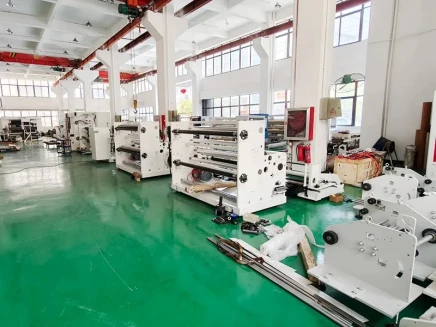
Heavy-duty metal coil slitting works continuously. This process cuts large metal coils into thin strips. It helps make different metal products. The entire system has five main step-by-step stages. These are uncoiling, leveling, slitting, scrap management, and recoiling. Raw metal moves smoothly through every single station. Sanhui Machinery offers high-quality heavy duty Slitting Machine options. These strong machines manage very heavy industrial metal weights. They also use exact precision control. Metal factories use these automated slitting machines every day. This helps them increase their total production output.
Key Takeaways
-
Heavy machines uncoil thick metal sheets safely.
-
They level metal to remove inside stress.
-
This happens before any cutting starts.
-
Sharp spinning knives cut big metal coils.
-
They make thin strips with exact edges.
-
The blades leave very small rough burrs.
-
Automated scrap winders keep factory floors safe.
-
Tension systems help wind finished coils tightly.
-
Modern PLC automation speeds up production time.
-
It reduces waste and keeps cuts consistent.
Loading and Uncoiling with Heavy Duty Slitting Machine Systems

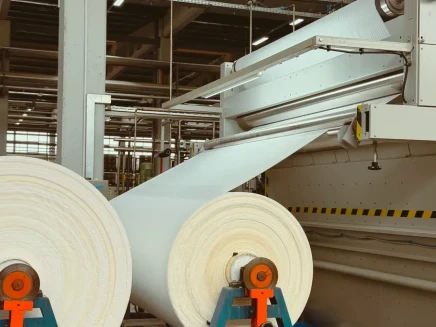
Factory work starts at the entry station. Coil cars lift metal coils. They move them to the main line. Workers center the coil. They put it on the decoiler mandrel. The mandrel grows wider. It holds the core tight.
Entry Coil Cars and Decoiler Mounting
Factories process raw metal with strong uncoiling machinery. These big systems stay very stable:
-
Hydraulic/heavy-gauge decoilers capacity: 3,000 kg to 20,000 kg for high-volume manufacturing
-
Thickness range: 0.3 mm to 12 mm
-
Maximum weight capacity: 1 ton to 25 tons (or heavy duty slitting machine setups exceeding 30 tons)
This safe loading steps prepare metal. The metal moves forward without damage.
Peeler Arms and Hydraulic Threading
Thick metal has strong inner tension. Unwinding big coils is very dangerous. Machines must control it carefully.
The hold-down roll system prevents clock-springing during uncoiling by securely securing and maintaining pressure on the outer wrap of the coil.
Hydraulic peeler arms reach under the coil tail. The peeler blade lifts the steel edge. It pushes the metal to pinch rolls. These smart parts flatten the lead end. They feed steel into the leveling section.
Sanhui Machinery builds stiff uncoiling frames. They hold heavy coils safely. These heavy duty slitting machine frames stop shaking. They keep metal moving smoothly. Strong machine builds prevent bent parts. They protect cutting accuracy during big jobs. Tough industrial machines spin coils easily. They make metal flow better. Stiff steel equipment gives workers complete control.
Leveling Metal Sheets and Steel Coil Slitting Machine Cuts
Flat sheets enter the cutter after uncoiling. Uncut metal keeps internal stress from rolling mills. Big factory tools flatten metal. This steps protects future tools.
Stopping Metal Bends with Leveler Rolls
Leveler rollers bend raw sheets back and forth. Strong mechanical bending flattens heavy sheets. It removes stress before cutting happens. The leveling stage prepares sheets using three simple steps:
-
Material Yielding and Strain: Roller levelers push sheet metal into permanent yielding.
-
Residual Stress Homogenization: Yielding metal spreads out initial internal stresses. This process relaxes tight hidden forces inside.
-
Defect Elimination via Roll Positioning: Machine rolls remove structural sheet curves completely. They adjust roll setups for exact coil shapes.
Good leveling stops sheet curves across hard steel. Flat sheets move straight without sliding around.
Cutting Arbors and Knife Setups
Cutting uses spinning shafts with sharp tool parts. Tool makers fit hard knives onto two shafts. They add rubber rings and steel spacers. Heavy-duty slitting machines spin these shafts. This action cuts moving metal sheets continuously.
Tool makers pick strong alloys for heavy metal:
-
Recommended Tool Steel Sourcing: Buying good European alloy tool steel works best.
-
Processing & Treatment: Tool steel needs deep freezing and polished surfaces.
-
Performance Advantage: Good tools stop small chips on hard steel.
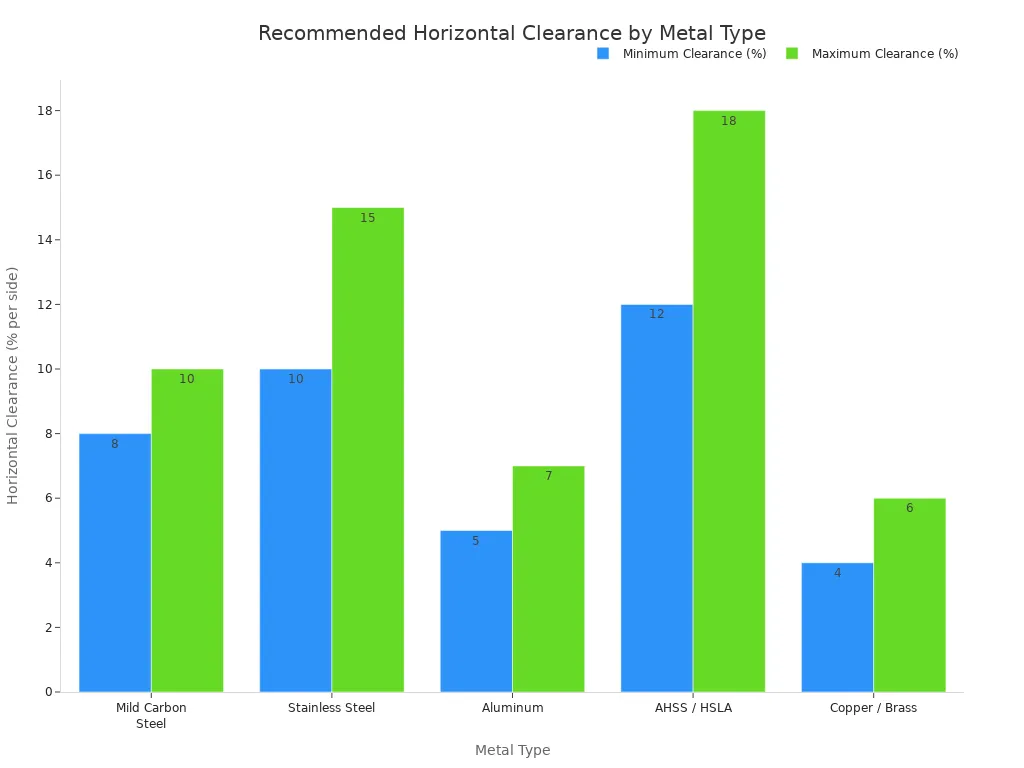
Clean metal edges require correct side knife space. Workers test alignments by turning arbors by hand. They adjust top and bottom overlaps carefully. Good tool care stops bad edges during work.
|
Metal Type |
Recommended Horizontal Clearance (% per side) |
Mechanism for Preventing Burr / Edge Defects |
|---|---|---|
|
Mild Carbon Steel |
8% – 10% |
Good space gaps stop rough edges easily. |
|
Stainless Steel |
10% – 15% |
Extra space handles metal that hardens quickly. |
|
Aluminum |
5% – 7% |
Tight spaces keep soft metal from tearing. |
|
AHSS / HSLA |
12% – 18% |
Wide spaces cut super hard metal types. |
|
Copper / Brass |
4% – 6% |
Small gaps keep soft metal shapes flat. |
Stiff arbors protect total cut edge quality. Operators keep exact cuts using three main design choices:
-
Arbor Shaft Stability and Diameter: Thick arbors bend less under big loads. Stable shafts stop vibrations and rough edge burrs.
-
Horizontal Knife Clearance Control: Bad gaps create rough and torn edges. Exact side gaps make very clean cuts.
-
Reduction of Tooling Wear: Stiff arbors keep sharp knives from dulling.
A modern steel coil slitting machine uses stiff shafts. This keeps cuts uniform on all metal strips.
Reaching Exact Cut Width Sizes
Metal width rules set limits for strip sizes. Following these size rules guarantees good product fits. Standard rules guide safe factory metal work:
|
Specification Parameter |
Benchmark / Standard Metric |
|---|---|
|
Standard Industry Burr Limit |
Max 10% burr height relative to sheet thickness. |
|
Advanced Target Burr Limit (Kloeckner) |
Max 5% burr height relative to sheet thickness. |
|
ASTM A1011 Standard |
Rule covers hot-rolled steel sheets and strips. |
|
ASTM A240 Standard |
Rule sets standard stainless steel sheet guides. |
Thin metal shims set tight blade positions. Small spacer stacks keep strip widths steady.
A fast coil slitting machine uses auto parts for top precision:
-
Closed-Loop Tension Control: Auto systems track roll speed to keep tension steady.
-
Edge Position Control (EPC): Sensors find strip edges and shift guide rollers.
-
Precision Cutter Positioning: Micro adjusters place cutting tools within ±0.05mm.
-
System Safeguards: Auto locks secure tools after routine sensor checks.
Sanhui Machinery builds every industrial coil slitting machine with strong steel frames. Their machine systems give great slitting accuracy up to ±0.1mm. This smart setup cuts tough metal coils cleanly. It makes smooth edges on all metal sheets. Automated machines make good cuts every single time.
Edge Scrap Control and Coil Slitting Machine Recoiling
Big steel rolls have uneven edges. Operators cut these rough edges off. This step makes sheet sizes exact. Slitting cuts thin trim on sides. Special tools collect this extra metal. The main line never stops moving.
Trimming Edges and Scrap Winder Processing
Fast line cuts make side trim. Choppers and winders process sharp edges. Rotary tools cut long strips fast. Smart waste systems work very well:
-
Self-Threading Entry Chutes: Funnels guide scrap into sharp jaws.
-
Shimless Knife Design: Special holders set gaps without shims.
-
Extended Knife Lifespan: Four-edged blades flip to last longer.
-
Integrated Suction and Chopping: Strong air tubes pull trim fast.
High-speed scrap tools cut thin trim. They process 3,000 feet per minute.
Auto scrap collection keeps floors clean. Safe waste removal protects factory workers.
Closed-Loop Tensioning and Strip Separation
Steel sheets have different thick spots. Thick centers wrap very tight. Thin sides get loose quickly. Tension stands fix this problem. They push every strip evenly.
A strong coil slitting machine uses pads. Drag rolls hold strips tight. Disc tools separate small metal strips:
-
Strand Separation: Thin discs divide every metal strip.
-
Direct Alignment: Overhead arms align discs with knives.
-
Equal Distribution: Machines center strips across the drum.
-
Preventing Interleaving: Hard discs stop strips from crossing.
Good tension makes tight metal coils. Equal tension gives great cut results.
Recoiler Mandrel Rewinding and Exit Discharge
The main drum grips strip ends. A motor turns the expanding shaft. It pulls metal through tension pads. Matching speeds keeps rolls tight.
Sanhui Machinery builds great automated systems:
|
System Feature |
Technical Specification |
Operational Benefit |
|---|---|---|
|
Closed-Loop Tension System |
Automatic Real-Time Monitoring |
It keeps tension steady always. |
|
EPC Edge Correction System |
Sensor-Guided Roll Positioning |
Sensors stop bad side drift. |
|
Hydraulic Mandrel Expansion |
Heavy-Duty Gripper Slots |
Strong clamps hold inner cores. |
|
Exit Coil Cars |
Floor-Level Hydraulic Lift |
Heavy cars move finished coils. |
Workers shrink the main drum later. Exit cars move heavy coils away. Push plates slide rolls onto turnstiles. These smart tools protect smooth surfaces.

Key Advantages of Heavy Duty Steel Slitting Machines
Modern plants gain huge perks from these machines. Heavy duty steel slitting machines cut big coils. They make thin, exact metal strips quickly. Processing plants rely on these fast lines daily.
High-Speed Output in Modern Slitting Machines
Fast slitting machines run up to 800 m/min. Stiff frames stay stable during fast cuts. Big plants use these lines for huge jobs.
Fast feeds boost plant output without losing cut accuracy.
These fast machines cut steel sheets continuously. Strong drives keep coil tension steady while rewinding.
Advanced PLC Automation and Tooling Setup
Modern coil slitting machine setups use PLC screens. Smart controls cut downtime and lower labor costs. Digital systems improve daily work through smart controls:
-
Digital Recipe Management: PLCs save settings for workers to pick quickly.
-
Elimination of Manual Adjustments: Auto setups stop human errors during prep work.
-
Certified Process Repeatability: Saved settings keep quality high for every order.
Fast tool changes speed up setup times. Smart machines align coil edges automatically without stopping.
Minimizing Waste in Heavy Industrial Processing
A steel coil slitting machine reduces metal waste. Precise arbors make clean cuts on every strip.
Sanhui Machinery builds tough custom machines. A heavy duty slitting machine uses strong steel. They offer a 1-year machine warranty. They add a 2-years core parts warranty. They provide global tech help for every coil slitting machine. Factory teams trust a heavy duty slitting machine for great cuts and low repair costs.
Heavy metal coil cutting transforms large steel rolls. It uses five key stages. These are uncoiling, leveling, cutting, scrap gathering, and recoiling. Strong machines keep tight cutting accuracy. They offer limits within ±0.1mm. This protects metal quality during work. Smart systems boost fast factory output. The process cuts material waste. It also stabilizes steel strip production. Modern plants rely on slitting machines. These tools give clean edge quality.
Work with Sanhui Machinery today! Sanhui Machinery is a global partner. They offer reliable slitting and rewinding equipment. Their custom tools fit your needs.
FAQ
What materials can a steel coil slitting machine handle?
Plants cut many metal types fast. Common items are carbon steel and aluminum. They also process copper and strong alloys. Tough cutter shafts slice thick master rolls. They make clean, even metal strips. They leave no sharp, rough edges.
What are the main types of steel coil slitting machines?
Companies group coil slitting machines by speed. They check sheet thickness and automation levels.
Thin-gauge, medium-gauge, and thick-gauge setups process distinct sheet sizes. Quick auto lines tackle big plant needs with care.
How do operators select different types of steel coil slitting machines for a slitting process?
Engineers check top coil weights first. They test sheet thickness and daily output. This helps plan the cutting job. Plant bosses check shop layouts next. They inspect safety parts and automatic controls. They review every coil slitting machine. Then they make a final purchase.