Kraft Paper Slitting Machine Selection Guide for Packaging Packaging and Converting
You choose the right Slitting Machine by looking closely at paper weight, master roll width, tension control capability, target throughput, and slitting technology. This detailed guide helps you build a clear technical framework. You can easily compare light flexible packaging paper to heavy, stiff board stock.
A dedicated slitting machine manufacturer builds special converting equipment to process different material grades. When you choose the right machinery, you make your kraft paper slitting machine work with top efficiency. Good equipment choices directly speed up production, reduce material waste, keep roll quality high, and increase your overall profit during daily packaging work.
Key Takeaways
-
Choose the right slitting machines by matching the paper weight, tension control, and planned production speed.
-
Use spinning shear blades to make clean edges and lower paper dust on thick paper.
-
Put in differential rewinding shafts to fix uneven paper thickness across several finished rolls.
-
Use vacuum cleanup systems and tough blades to handle rough paper dust and stop machine damage.
-
Use smart electronic web guiders and automatic knife tools to shorten job setup times significantly.
-
Keep the right paper tightness and starting force to fix usual problems like uneven layers and soft middles.
Kraft Paper Dynamics: A Complete Buyer Guide
You check material traits to pick converting machinery. This full buyer guide helps you choose a great kraft paper slitting machine for your packaging plant. Professional gear handles big unwind diameters from 800mm to 1600mm and holds heavy loads up to 3000kg.
GSM Ranges and Tensile Strength Analysis
You process various material weights during packaging work. This buyer comparison guide shows standard thickness levels.
|
Paper Type |
Typical GSM Range |
Packaging Context |
|---|---|---|
|
Lightweight Flexible Wrapping |
30-50 GSM |
Ultra-lightweight food wrap |
|
Lightweight Flexible Wrapping |
40-80 GSM |
Food wrapping |
|
Heavyweight Linerboard |
300-400 GSM |
Heavy-duty industrial liners |
|
Heavyweight Board |
Over 400 GSM |
Heavy-duty board |
Lightweight Kraft for Flexible Packaging
Light paper needs careful tension control during fast production. Too much pull stretches thin sheets and leads to easy web tears.
You adjust low-range web tension controls to protect fragile wraps. Correct nip pressure prevents material wrinkles during fast processing.
Heavyweight Linerboard Specifications
Heavy linerboard needs strong mechanical support when you unwind master rolls. Stiff fibers resist bending and need steady torque control along core shafts.
You set up reinforced unwind stands to handle heavy paper rolls safely. High load strength keeps heavy materials straight without mechanical bending.
Web Tension and Caliper Variation Control
Thickness changes across the web cause structural flaws while winding paper.
|
Defect Related to Caliper Variation |
Recommended Tension Control Method for Slitting |
|---|---|
|
Baggy Paper |
Reduce cross-deckle caliper variation. Wind softer. |
|
Air Shear Burst |
Minimize cross-machine sheet caliper variation. Wind soft rolls. |
|
Slitter Edge Curl |
Reduce web tensions through slitter section. Set slitters at proper depth. |
Closed-Loop Tension Control Systems
An automatic tension system checks real-time web feedback with sensitive load cells. The main PLC adjusts torque constantly to keep web pull smooth.
Steady tension stops sudden slack and prevents material breaks when changing speeds. You keep even roll firmness across all finished sizes.
Managing Caliper Thickness Fluctuations
Uneven thickness across the web makes loose edges and soft spots during rewinding tasks. Changes in sheet caliper alter local roll sizes along the shaft.
You use differential winding shafts to fix uneven paper thickness. A semi-automatic roll balancer helps equalize winding pressure across all separate lanes.
Paper Dust and Abrasive Fiber Management
Slitting thick sheet rolls spreads fine paper dust into active work spaces.
Integrated vacuum systems at the main cutting area catch dust before particles settle inside mechanical bearings.
Integrated Vacuum Dust Extraction
Fast vacuum hoods clean the primary cutting zone right away during production. Nearby suction nozzles gather loose airborne particles right at the blade edge.
Clearing debris at once stops rough dust from dirtying mechanical bearings. Clean machinery keeps continuous production running smoothly without sudden delays.
Hardened Slitting Blades for High Wear Resistance
Standard high-speed steel blades dull fast on thick recycled paper stock. Rough fibers wear down knife edges quickly and make extra burrs while slitting.
A reliable slitting machine manufacturer uses tungsten carbide or powdered metallurgy knives like CPM 10V. Tough knife sets keep sharp edges and boost long-term cutting output.
You can link this main slitting line to a die cutting machine for total package making. You can also put another die cutting machine downstream to speed up box finishing.
Choosing the Right Slitting Machine Mechanism
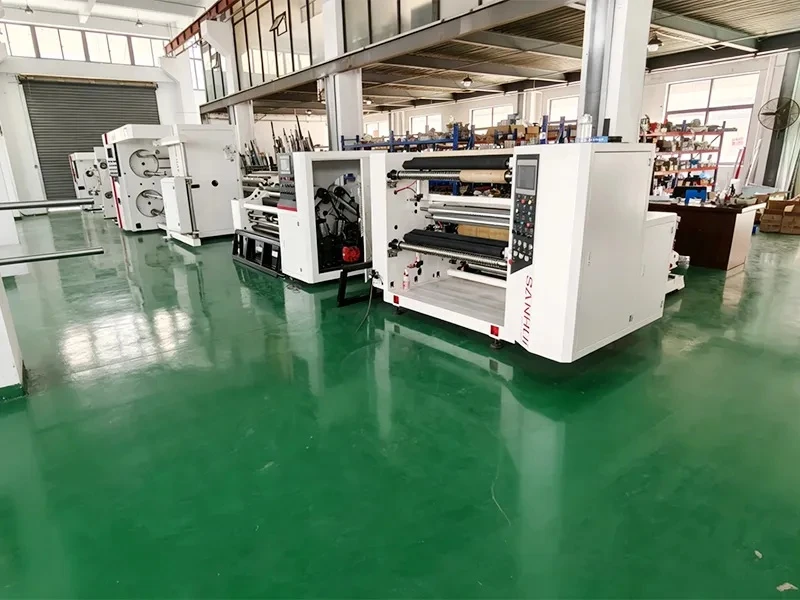
Selecting the proper slitting machine setup ensures clean raw material processing. Machine operators match each cutting style to their specific material grades. Modern web handling units rely on precise blade arrangements to keep paper moving. Proper mechanics protect delicate raw fibers from damage during daily runs. Choosing the correct converting mechanism cuts downtime and boosts roll quality for every order.
Rotary Shear Slitting Technology
Rotary shear systems cut materials cleanly by using overlapping circular blades. You align top and bottom knives together like pairs of household scissors. This continuous cutting process creates crisp edges on thin webs and dense paper. Proper knife alignment prevents sheet warping and controls fiber splitting at high speeds.
Shear Geometry and Blade Overlap Setup
You must keep exact physical spacing between top circular blades and bottom anvils. Clean shearing action relies on precise blade overlap and tight side clearance gaps. Correct settings keep heavy materials from crushing during fast production cycles.
|
Parameter |
Recommended Value / Range |
Notes |
|---|---|---|
|
Blade Overlap |
1‑2% of material thickness (0.3‑0.5mm for 40‑60gsm) |
Minimal overlap prevents crushing and fuzzy edges. |
|
Side Clearance (Gap) |
0.02‑0.05mm |
Critical spacing between the faces of the opposing blades. |
|
Blade Angle |
45° bevel (30‑35° for lighter grades) |
Influences the shearing action and final edge quality. |
|
Optimal Shear Slitting Range |
40‑60 gsm lightweight kraft paper |
The specified setup is tailored for this material weight. |
Curled material flags show wrong side gaps or improper cant angles. Tight gaps bend the moving web instead of slicing through fibers cleanly. Set blade angles to 45° for heavy paper or 30-35° for lighter stock. Horizontal overlap between 0.3-0.5mm ensures sharp cutting at any production speed. This exact setup maintains ±0.1mm slitting accuracy and reliable cutting quality every run. Your slitting machine operates smoothly when you set blade positions with great care.
Edge Quality Benefits for Dense Paper Stock
Rotary shear tools offer better cutting performance than simpler mechanical methods. They protect dense paper stock from tearing during high-speed production runs.
This application demands precise concentricity. Strict tolerances are required to maintain a continuous shear cut without causing web breaks. Even minor runout in a rotary blade causes uneven wear and poor slit quality.
Rotary shear cutting offers big manufacturing perks for busy converting facilities:
-
Circular shear knives produce a sharp, scissor-style slice.
-
This method creates ultra-smooth edges without ripping paper fibers.
-
The system leaves dust-free borders, ideal for downstream bag making and printing.
-
Heavy kraft boards need shear blades to prevent rough edges and paper dust.
Clean paper edges feed smoothly into a downstream die cutting machine without jamming. High edge quality also reduces equipment wear in later packaging steps.
Score Cut and Razor Slitting Mechanics
Alternative cutting techniques offer distinct mechanical advantages for different shop setups. You evaluate score cutting and razor blades using target goals and web choices. Picking improper tooling causes fast blade wear and frequent paper web breaks.
Score Cutting for Quick Setup Economies
Score cut systems push hardened circular blades against solid steel anvil rollers. Pneumatic pressure quickly crushes through moving paper as it travels along. Operators easily shift knife positions across semi-automatic equipment setups during production. Hardened score knives pinch moving paper firmly against smooth anvil sleeves.
Crush cutting simplifies blade adjustments when setting up small custom jobs. You increase total output efficiency when swapping orders on heavy paper stock. However, high contact pressure creates extra paper dust along the web line.
Limitations of Razor Blades on Fibrous Substrates
Razor blades cut soft plastic films with impressive mechanical ease. However, you should avoid fixed razor blades on thick fibrous paper stock. Thin razor edges dull fast against tough, highly abrasive wood fibers. Constant cutting friction builds high heat along blade edges at top speeds.
Dull razor blades pull and drag through thick paper sheets during cutting. Dragging blades create rough borders, extreme paper dust, and sudden tears. Excessive dust buildup reduces total cutting performance across your slitting system. You need shear blades to feed a fast die cutting machine smoothly. Using correct mechanical blade designs helps operators maintain stable production speeds.
Rewinding Systems for Kraft Paper Slitting Machines
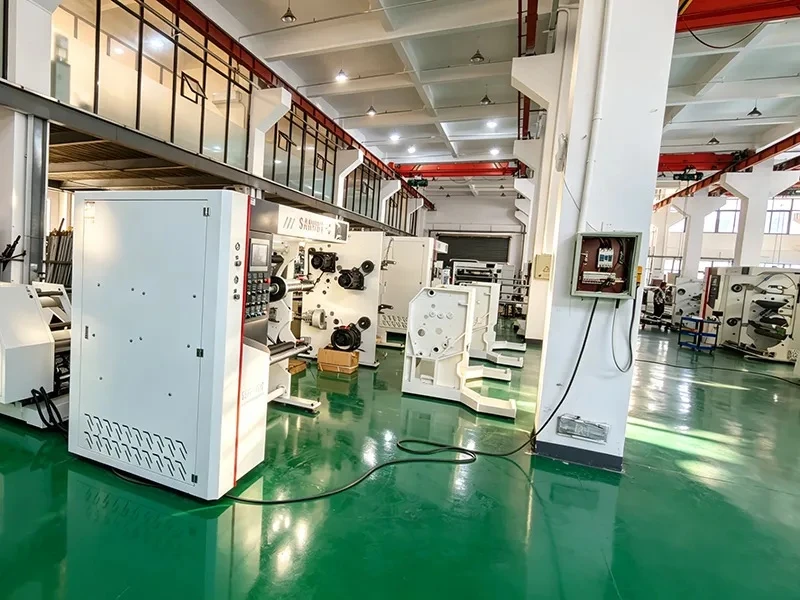
Choosing the right rewinding mechanism ensures stable production and high product quality. Converting operations use three primary setups: center rewinding, surface rewinding, and differential rewinding. Each option manages material tension differently during daily production. Selecting the optimal structure protects your paper rolls from defects and core damage.
Center and Surface Rewinding Mechanics
Center rewinding and surface rewinding use distinct physical forces to build finished rolls. Center winding applies torque directly through the central shaft. Surface winding turns the roll through contact pressure with an external driven drum.
Tension Control Dynamics on Center Shafts
Center winding gives you direct control over web tension for each individual slit lane. Motorized drives turn the rewind shafts directly to maintain precise pull forces. This direct drive setup prevents material stretching during high-speed operation.
Paper and board web converting spans a weight range from lightweight paper (15 g/m²) to heavy kraft board (400 g/m²). Each requires a different winding approach: surface winding for tissue to avoid core crushing, center winding for coated label stocks. Tension variation during rewinding directly affects roll hardness and diameter consistency. For kraft paper webs, surface winding is used to prevent core crushing and provide precise roll hardness control.
Surface Rewinding for Large Finished Diameters
Surface rewinding relies on constant contact pressure between a large driven drum and the winding roll. The machine drives the outer layer of the roll directly. This mechanical approach builds dense, hard rolls without placing excessive torque on the core.
|
Rewinding System |
Primary Tension Control Method |
Key Impact on Finished Roll Quality (Kraft Paper) |
|---|---|---|
|
Surface Winding |
Driven by contact pressure with a drum. Indirect tension control via nip pressure. |
Produces dense, hard rolls. Suitable for standard paper/paperboard. Prevents core crushing in lightweight papers. |
|
Center Winding |
Direct drive of rewind shafts. Allows for precise tension control for each individual slit roll. |
Enables winding with less pressure to avoid stretching delicate materials. Better for sensitive or slippery substrates. |
|
Differential Rewinding |
Uses differential shafts (pneumatic or mechanical) to allow each slit lane to slip, compensating for thickness variations. |
Eliminates tension differences between lanes, preventing loose or tight winding. Ensures uniform roll hardness across all strips. |
A well-engineered kraft paper slitting machine uses surface winding to process large roll diameters. Sanhui Machinery builds specialized equipment that handles rewinding diameters up to 1200mm easily. High structural rigidity maintains stable roll rotation throughout long continuous runs.
Differential Rewinding Shaft Operations
Standard solid shafts present clear limits when you cut multiple narrow strips across a wide web. Slight variations in web caliper cause individual strips to wind at different tightness levels. Differential friction shafts resolve this problem by allowing independent core rotation.
Friction Ring Friction for Multi-Roll Caliper Offset
Differential shafts use internal friction rings to support separate winding cores across the same shaft. Pneumatic pressure controls the internal friction elements continuously during operation. The slitting line maintains constant slip across individual lanes.
-
Center-Driven Rewinding: Provides accurate tension control for narrow strips and prevents material deformation.
-
Surface-Driven Rewinding: Produces a uniform roll surface and dense roll structure for high-rigidity packaging sheets.
-
Duplex Differential Shaft Rewinding: Compensates for caliper thickness variations to eliminate tension differences between separate lanes.
This friction control method compensates for uneven sheet thickness across the full master roll width. Every individual slit roll receives proper holding torque regardless of thickness changes. This process guarantees clean web cutting and smooth roll faces across all narrow lanes.
Preventing Interlocking and Roll Web Slippage
Uneven web tension causes adjacent slit rolls to weave sideways and interlock during winding. Loose individual lanes slip around the core, while tight lanes stretch out of shape. Differential friction shafts stop roll web slippage completely by equalizing radial pressure across every strip.
Advanced mechanical engineering keeps every roll side completely flat during fast operational cycles. Modern equipment from Sanhui Machinery achieves precise rewinding end face flatness of ≤0.5mm. Clean end faces stop edges from catching during high-speed package manufacturing.
An automatic control unit monitors shaft torque continuously to streamline daily production tasks. Precise tension control stops core crushing and structural roll failure during transport. Investing in proper rewinding mechanics ensures neat finished rolls and higher profitability for your converting plant.
Smart Controls and Alignment Gear in Today's Equipment
New processing machines use smart electronic systems to boost daily plant output. Sanhui Machinery pairs simple computer screens with web alignment tools to stop paper from slipping off course.
Smart Web Alignment and Alignment Controllers
Digital edge guiders keep fast-moving paper straight while the machine runs. These smart tools stop the sheet from drifting sideways before it reaches the knives.
Sensor Types for Tracking Paper Edges
Edge tracking units check moving sheet borders with optical or sound sensors. You pick light or sound sensors based on how clear your paper is. But fine paper dust can still cause real operational troubles:
-
Dust-covered sensors send wrong position readings directly to the main system.
-
The main computer uses those bad readings to adjust moving paper that was already straight.
-
These wrong moves make uneven roll sides and crooked finished products during production.
-
This poor tracking leads directly to thrown-away paper.
You must wipe sensor lenses often to maintain proper web alignment.
Moving Frame Alignment Tables
Dynamic alignment tables shift the unwind stand sideways along a heavy frame. Electric motors make smooth side adjustments to keep paper centered. This steady movement feeds raw material straight into secondary gear like a die cutting machine.
Smart Knife Setup and Computer Systems
Central computer controls make tough cutting setups simple for equipment operators. You control full cutting runs directly on colorful touchscreen displays.
Air-Powered Blade Holder Setup
Air-driven holders clamp cutting knives tight on mounting shafts without hand tools. Dynamic pressure control tools maintain steady cut quality and lower blade wear during long runs.
|
Feature |
Contribution to Consistent Slitting Quality |
Contribution to Reduced Setup Time |
|---|---|---|
|
Automatic Pressure Adjustment Mechanism |
Maintains consistent cutting quality by responding to material variations; prevents excessive blade wear. |
Eliminates need for manual pressure adjustments during production runs. |
|
Quick-Change Blade System |
N/A |
Enables blade replacement in minutes; minimizes downtime compared to traditional systems. |
These pneumatic systems keep exact blade angles for accurate slitting. Fast-swap knife features let workers change blades in just a few minutes. This setup removes slow hand adjustments when changing production runs.
Saved Job Profiles and Rapid Changeovers
The main control software saves custom cutting setups for repeat orders. You pick saved settings to adjust paper pull, motor speed, and knife spacing automatically.
|
Scenario |
Changeover Time |
Improvement |
|---|---|---|
|
Before (Manual) |
Approximately 60 minutes |
Baseline |
|
After (Automated Systems) |
Less than 5 minutes |
> 92% faster |
Smart systems cut down manual tweaks needed in older setups. Operators finish job changes fast and send finished rolls straight to a die cutting machine. Simple controls work with automated tools to deliver steady output on every job.
Mitigating Finished Roll Defects in Converting Operations
You eliminate costly converting errors by watching your machine settings closely during daily slitting operations. Unchecked processing errors ruin your materials and lower total plant efficiency. Modern converting facilities require precise operational control to maintain smooth slitting performance across every single shift.
Preventing Edge Flaws and Dust Build-Up
Dull blades and bad mechanical alignment damage finished roll edges. You fix these common problems by setting your tooling with accurate geometric angles. Operators maintain clean material surfaces through proactive blade inspection routines.
Blade Angle Tuning for Clean Edges
You adjust the shear blade angle precisely to stop paper fiber crushing during processing. Proper cutting tool positioning creates clean web margins without making excess debris. Incorrect shear settings cause rough edges, which degrade your material appearance over long production cycles.
Right cant angles prevent web drag and keep edges crisp. You inspect your cutting tools daily to maintain consistent edge quality across all finished rolls. Correct shear alignment also extends tool life and reduces blade sharpening frequency.
Anti-Static and Vacuum Hood Integration
Static electricity attracts loose fiber debris directly to your slitting zone. You place anti-static bars along the paper path to neutralize electrical charges on moving webs. Unchecked static charges make fine dust stick firmly to finished rolls.
High-power vacuum hoods capture airborne debris right at the slitting blades. Automatic suction units pull loose particles away before fibers contaminate machine components. Clean processing environments keep sensitive converting equipment running without unexpected maintenance delays.
Correcting Structural Roll Flaws
Structural roll defects cause material waste during converting tasks. You correct these mechanical defects by managing your core winding parameters carefully. Proper winding procedures stabilize finished rolls during storage and high-speed transport.
Eliminating Telescoping and Starred Profiles
Improper winding causes telescoping and starred profiles on finished kraft paper rolls. You fix these paper roll flaws by managing your primary winding settings:
-
Applied web tension
-
Target roll hardness
-
Clean edge trim
-
Active defect removal
Keeping web tension even stops inner roll layers from sliding sideways during winding. You check roll hardness constantly to prevent starred shapes on finished paper rolls. Good tension tracking keeps your roll shapes stable during long slitting runs.
Resolving Soft Centers and Core Slippage
Soft roll centers happen when initial winding tension drops too low near the core. You apply higher starting torque to lock inner paper layers firmly onto the rewind shaft. Firm center layers support outer material rolls without collapsing during heavy handling.
Core slippage damages your cardboard cores and disrupts smooth slitting operations. Proper pneumatic shaft expansion holds every core tight and protects overall product quality. Responsive tension drives give your machine steady control over heavy roll weights.
Assessing a Slitting Machine Manufacturer and Overall Costs
You review builders by checking more than just the sticker price. A full calculation of total ownership costs covers daily running efficiency, repair bills, and long-term hardware guarantees.
Upfront Equipment Cost Against Daily Plant Yield
You weigh equipment prices against daily factory output. Fast-running slitting machinery recovers its cost quickly by delivering steady product yields.
Checking Running Speeds and Yield Production Rates
You measure work output by checking official machine speeds against daily production targets. Basic models run at 200m/min or 400m/min, while high-speed lines hit 800m/min. Safe running speeds usually sit around 70% to 80% of top rated speeds. Matching machinery speed to paper weight keeps cutting work running smoothly.
Fast production speeds deliver cut rolls straight to a downstream die cutting machine. Higher output lowers the cost of making every finished order.
Cutting Labor Expenses via Automated Roll Processing
Current automated features help reduce overall daily staffing costs. You trade heavy manual labor for powered loading arms and fast shaft changers.
Plant managers frequently compare fully automated lines against semi-automatic gear setups. A semi-automatic roll loader lightens physical work during roll changes. Yet full automatic roll changers increase plant output even more by skipping hand knife adjustments.
Support, Upkeep, and Long-Term Equipment Life
Routine machinery care safeguards your equipment purchase for many years. You stick to strict service schedules to keep cutting precise.
Scheduled Upkeep Routine Plans
Strict maintenance plans prevent sudden machine stops during heavy work shifts. Adhering to factory guides expands machine service life while keeping total output high.
|
Maintenance Task |
Rationale |
Key Operational Method |
Key Benefit |
|---|---|---|---|
|
Regular Inspection |
Spots minor problems early. |
Inspect knife setups, guide rolls, and drive motors weekly. |
Cuts sudden breakdown repairs by up to 30%. |
|
Component Lubrication |
Reduces parts friction. |
Put top-grade lubricants on active drive gears monthly. |
Increases part operating life by 25%. |
|
Blade Servicing |
Stops poor cuts and extra trash. |
Grind cutting blades every 200-500 work hours. |
Raises cutting productivity by up to 40%. |
|
Debris Removal |
Prevents paper dust piles. |
Blow off equipment daily using compressed air tools. |
Drops overall power usage by up to 15%. |
Proper machine training drops gear misuse errors by 40%. Well-maintained equipment feeds clean paper rolls straight to a die cutting machine without any jams.
Factory Spare Parts and Vendor Assistance
You require dependable supplier assistance to maintain non-stop plant operations. Partnering with a reliable slitting machine manufacturer guarantees quick access to factory replacement parts.
Wenzhou Sanhui Machinery Manufacturing Co., Ltd. works as a reliable slitting machine manufacturer for international paper converters. Sanhui Machinery provides customized equipment designs, a 1-year machine warranty, a 2-year core component warranty, and round-the-clock technical help. This complete buyer guide helps you select the best kraft paper slitting machine for your plant.
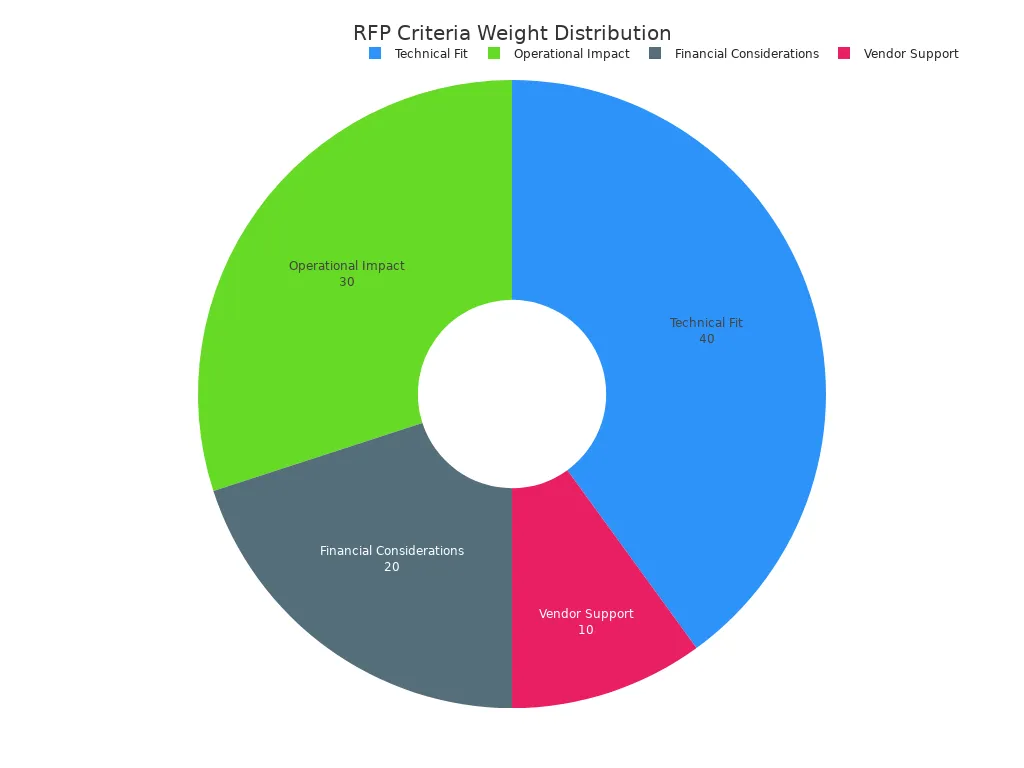
You pick the best kraft paper slitting machine by checking your paper details, needed automation level, and rewinding setups. This simple buyer guide makes choosing paper equipment easy. Factory managers use six key steps to write a great Request for Proposal:
-
Map Out Project Goals and Scope
-
Collect Ideas from Team Members
-
List All Must-Have Machine Features
-
Write Up the RFP Document
-
Share Clear Rules for Submitting
-
Create Fair Scoring Standards
Working with a dependable slitting machine manufacturer like Sanhui Machinery ensures accurate paper cutting results. Their custom equipment options boost your daily work output, reduce scrapped materials, and deliver great long-term value for your money.
FAQ
What materials can a kraft paper slitting machine process?
These versatile machines easily cut many types of paper, plastic sheets, foil, and sticky labels. Built to handle thin food wraps alongside thick cardboard, this equipment runs different items without trouble.
What is the maximum running speed of Sanhui slitting machines?
Top-end models move paper at top speeds of 800 meters every minute, while standard units run at 200 or 400 meters. Workers normally run machines at about 70 to 80 percent of top speed to keep work steady.
How precise is the slitting accuracy on dense paper stock?
Careful machine design makes super exact cuts within a tiny fraction of a millimeter. Smooth winding gear leaves roll sides flat, giving you clean paper edges without any ugly wrinkles or rough spots.
What unwinding and rewinding roll diameters can you load?
The giant unwind stands take huge raw paper rolls up to 1600mm across. Finished rolls can grow to 1200mm wide, and heavy-duty parts safely hold total weights over 3000 kilograms.
What is the minimum slitting width available on these machines?
You can adjust the cutting blades to slice paper into tiny strips just 10mm wide. Custom knife setups let you cut one wide sheet into many thin strips during a single pass.
How does clean slitting help downstream packaging equipment?
Tidy cuts clear away rough edges and messy paper dust from finished rolls. These neat rolls slide right into a die cutting machine or printer without jamming parts or scattering extra dirt.
What warranty terms does Sanhui Machinery provide?
Sanhui Machinery covers the whole machine with a 1-year guarantee and important main parts for 2 years. Factory experts also offer around-the-clock help whenever your team needs quick answers.