



Protective Film Slitting Machine: Choose the Right One for You
Choosing the right protective film Slitting Machine means matching material thickness, glue stickiness, and surface delicacy with exact cutting methods, automatic pull control, and speed needs. Picking the wrong equipment leads to major working problems. You will deal with material stretching, glue mess, rough edges, static cling, and expensive machine shutdowns. When cutting delicate plastic rolls, a dedicated plastic film slitting machine handles items smoothly without causing surface damage or ruining product quality. You can stop costly material waste by using the best machine setups and strong pull control systems built for your factory needs. High-quality machinery keeps materials safe through every single cutting step.
Key Takeaways
-
Choose a slitting machine that works well with your material's thickness and flexibility.
-
Select razor blades for thin films and shear knives for thick protective covers.
-
Use smart pressure control tools to prevent material stretching and adhesive damage.
-
Include automatic roll changing features to increase daily factory production by forty percent.
Key Factors for Choosing a Protective Film Slitting Machine
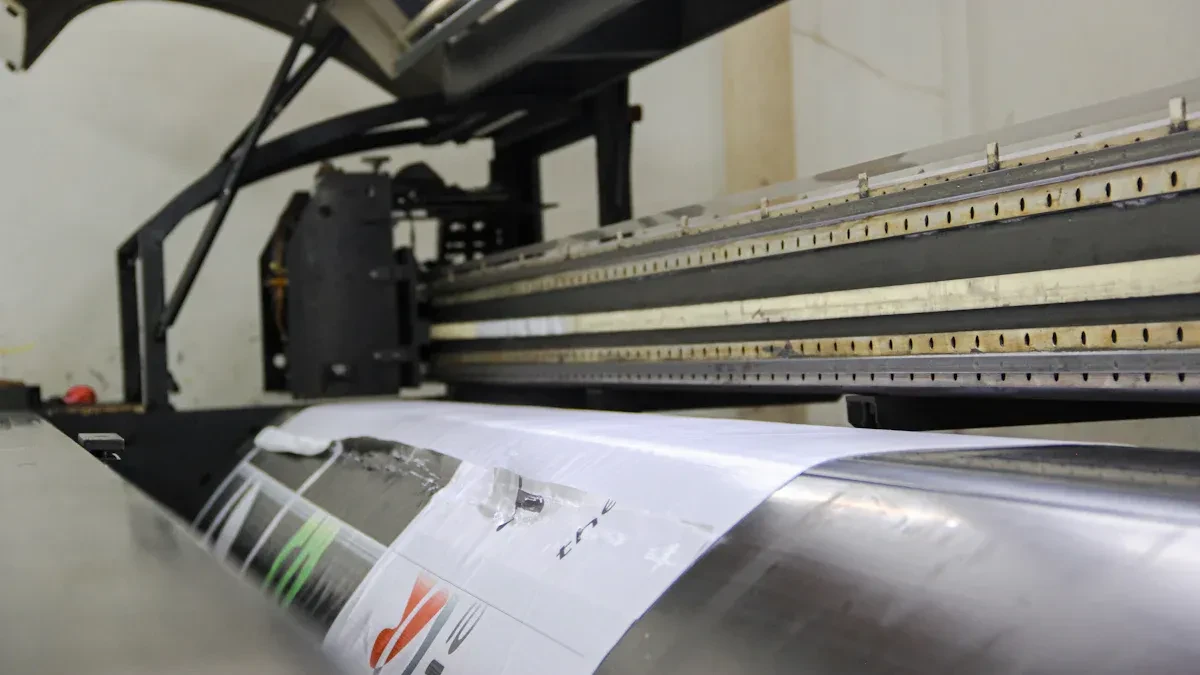
Picking the right protective film slitting machine requires checking machine designs and actual roll sizes carefully. You need to match machine features directly with your material traits and everyday output goals. Good equipment choices bring smooth edges, steady roll movement, and low scrap rates during non-stop cutting work.
Machine Configurations and Rewind Structures
|
Configuration Factor |
Impact on Film Quality and Operation |
|---|---|
|
Tension Control Zones |
Divided unwind, slitting, and rewind setups stop film stretch and core collapse. |
|
Knife Geometry |
Exact blade placement stops rough burrs, edge dust, and quick knife wear. |
|
Rewind Pressure Profile |
Managed roller force creates tight inner wraps without crushing delicate film layers. |
|
Rewind Taper Profile |
Lowering tightness toward outer layers stops edge slipping and core crushing. |
|
Roller Alignment |
Straight guide rolls stop material side-drift and crooked roll winding. |
Dual-shaft rewinding designs use two separate winding shafts to process delicate protective films safely. This layout creates real space between nearby cut film strips. You keep neighboring film edges from overlapping, catching, or sticking together on the shaft. Dual systems handle changing material thickness easily across narrow roll widths.
Turret rewinding systems add fast, non-stop roll swapping to high-speed film cutting setups. A spinning turret arm shifts finished rolls out while placing empty cores into the cutter without pausing. You boost overall daily output, keep steady tension control, and meet big production goals with very little hand labor.
Unwind and Rewind Diameter Specifications
Main roll sizes set your needed unwind stand weight capacity. You must pick an unwind system that holds main roll sizes from 800mm to 1600mm across. Bigger unwind sizes lower full roll swaps, cutting down expensive machine pauses during busy slitting work. Smart edge tracking tools on the unwind stand lead incoming film straight into the cutting area without drift.
Rewind size choices control your final roll dimensions for buyers. Factory film cutting work needs finished roll size options from 600mm to 1200mm across. Your roll slitting machine must keep steady winding push and smooth line speed as rolls grow bigger. Proper center-surface winding tools stop soft centers or overly tight outer layers across these big sizes.
Matching total machine width capacity to your supply rolls removes extra side trimming scrap. You should pick adaptable setups that cut wide supply rolls while making clean, narrow cuts down to 10mm. Making accurate 10mm cuts on weak film needs stiff blade holders and steady pull areas. High-precision guide rolls stop film shifting, keeping sharp edge quality on every thin strip.
Substrate Compatibility in Plastic Film Slitting Machine Selection
You must evaluate substrate traits before you configure your plastic film slitting machine. Film thickness and softness directly dictate tension limits and cutter setups.
Managing Film Thickness and Softness
Soft materials like PVC stretch easily during slitting. Friction heat can melt PVC and make it stick to cutting blades. You should choose sharp low-angle blades with PTFE coatings to stop film sticking. Stainless steel blades also resist corrosion from chemical additives. High-stretch PE and LDPE films require precise low-tension control. Improper tension causes material stretch and web deformation. Meanwhile, rigid PET demands accurate tension control, and BOPP requires clean cutting with stable web guiding. You must match machine setups to maximum and minimum thickness values.
|
Substrate Type |
Material Behavior |
Machine Requirement |
|---|---|---|
|
PVC |
Soft, heat-sensitive, prone to stretching |
Low-angle PTFE-coated blades, friction heat management |
|
PE / LDPE |
High elasticity, stretches under high pull |
Precise low-tension control |
|
PET |
Rigid structural film |
Precise tension control systems |
|
BOPP |
Crisp, uniform plastic film |
Clean slitting blades, stable web guiding |
Surface Anti-Scratch and Static Prevention
Delicate film surfaces demand careful handling during web movement. Roller surface choices protect delicate surfaces from abrasion:
-
Cork-covered rolls offer compressible, non-marking web support.
-
Sponge and foam rollers cushion soft substrates evenly.
-
Grooved rolls vent trapped air to stop surface drag.
-
Silicone-covered rollers prevent tacky films from sticking.
You can also install non-contact front-surface paths to keep sensitive faces away from roller contact.
Static electricity attracts ambient dust and causes material cling. Active ionizing bars with compressed air offer the most effective static protection during web slitting. Air knives with ionizing bars remove dust and neutralize charges in one pass. DC ionizers work well across long distances up to 1000 mm. Short-range AC ionizers neutralize charges within 100 mm. Passive tinsel only reduces static down to about 2000 V. Choosing a dedicated protective film slitting machine with proper static bars ensures clean output. Correct roller choices and static devices turn your plastic film slitting machine into a safe, reliable converter.
Cutting Styles and Getting Super Precise Cuts
Picking the best cutting setup guards film borders and keeps quality high. Various safe covers need specific blade shapes to stop face marks and glue buildup.
Razor Cutting for Thin Protective Covers
You can pick razor cutting as a low-cost choice for thin, smooth covers. This style uses cheap tool costs and easy setup steps to give neat cuts on flexible rolls.
|
Cutting Style |
Edge Quality |
Blade Wear and Care |
Running Cost |
|---|---|---|---|
|
Razor |
Best for thin, soft films; heat can form edge beads |
Quick blade wear on rough webs |
Low tool cost, simple setup, fast blade swaps |
|
Shear |
Neat border, steady fast-speed work |
Needs exact overlap and side push checks |
Paired round knife setup adds extra care |
|
Crush / Score |
Leaves squashed borders, dust, and bends |
Metal roll wears down fast |
Simple setup, hurts soft face edges |
You can set up razor tools using razor-in-air or razor-in-groove layouts:
-
Free-air razor cutting holds the knife between two guide rolls. You use this style for super-thin sheets because the blade slices the free web neatly.
-
In-groove razor cutting fits the knife inside a slotted roll. The slotted roll holds the sheet right at the cut point. This extra support keeps fast factory sheets steady.
High heat from fast work can melt soft sheets. Heat forms melted drops along the finished border. You can make blades last longer by picking strong knives with special coatings. Hard tungsten carbide knives and slick coatings drop heat from rubbing a lot. Normal knife shapes include slotted 57×19×0.40 mm and 3-hole 43×22×0.13–0.40 mm sizes. Using razor thickness choices from 0.009 to 0.015 inches keeps the cutting work steady without shaking thin sheets.
Shear Cutting for Tough Protective Covers
Strong sheets and thick layered films need shear cutting to get smooth borders without dust. Shear cutting works like scissors by using layered top and bottom round knives.
To get exact cuts right down to ±0.1mm, you must use stiff blade holders and tight line settings.
-
Keep knife thickness limits within ±0.002 mm to ±0.005 mm to stop stacked width errors.
-
Keep side wobble at or below ≤0.005 mm to stop repeating space changes.
-
Make sure side flat shapes stay under 0.003 mm to 0.005 mm across all knife faces.
-
Set top-down overlap from 0.15 mm to 0.25 mm for super-thin sheets to stop sheet folds.
Stiff knife holders offer zero side play and strong shafts to hold these tight limits under heavy motion loads.
Sanhui Machinery builds custom gear to manage tough cutting tasks. Sanhui Machinery puts exact knife leveling parts and stiff cutter blocks into every slitter unit. These exact parts keep top and bottom knives lined up smoothly during non-stop work. The clean cutting action centers force right at the shear spot. This managed step stops glue shifts, gets rid of rough edges, and prevents tacky glue mess from coating your gear. Sanhui Machinery gives steady cutting choices across all your plant work.
Pull Management in Sanhui Roll Cutter Setup Choices
Self-moving sheet management keeps weak faces safe while you run cutting tasks. Smart control parts keep steady pull through every step to stop sheet stretch and glue damage.
Closed-Loop Pull Control Setups
Fully-automatic closed-loop pull setups check sheet pull all the time. Parts feel real-time push and send live facts right to the main brain. The setup changes motor force fast to keep sheet pull inside exact bounds. You end sheet stretch and glue harm before flaws hit done rolls.
Using good lowering pull settings protects delicate rolls during non-stop rewinding. You must pick set patterns based on your current roll size:
|
Roll-size condition |
Recommended taper tension characteristic |
Purpose |
|---|---|---|
|
Small rolls (R/R0 < 2) |
Straight lowering pattern; keep drop under 40% |
Stop side sliding, which happens more early in winding |
|
Large rolls (R/R0 > 2) |
Curved or smart mixed pattern; keep drop over 40% |
Stop web buckling and inside stress while stopping sliding |
|
Guard-sheet wound rolls generally |
Stop flat pull and flat motor force; use lowering pull |
Balance inside side push and keep roll form steady |
This sharp control guards inside roll layers through every step. You keep clean faces without causing inside stress or body harm.
EPC Web Steering and Split Core Shafts
Edge Position Control (EPC) tools guide moving sheet borders fast during high-speed cutting steps. Eye sensors spot small sheet shifts and tell quick motors to line up the roll:
-
Sensors scan sheet borders all the time to spot side sliding.
-
Brain parts figure out exact track fixes right away.
-
Motors move the guide box to line up the sheet.
-
Fast fixes stop sheet lines, edge curling, and material stretch.
This live steering removes side sliding during non-stop feeding. Your plastic film slitting machine keeps raw sheets totally straight to protect cut quality.
Sanhui Machinery fits split friction shafts inside every roll cutter setup. These special shafts give separate turning force to single cores across many cut strips. The part keeps same rewinding pull even when sheet thickness changes across wide rolls. You get neat roll side line-ups with a rewinding end face flatness under 0.5mm.
Output Efficiency, ROI, and Sanhui Machinery Advantages
Picking the right cutting machine directly changes your daily output and your final money earnings. You need to balance speed against machine automation to get the best return on your investment.
Running Speeds and Automatic Roll Swapping
Normal cutting equipment works well between 200m/min and 400m/min for everyday factory tasks. Fast models go up to 800m/min, giving big factories the highest output options. You must pick machine speed based on your daily work needs. Choosing a fast roll slitting machine ensures smooth, steady movement without causing material tears.
Automated tools stop long pauses during roll swaps. An automatic turning unloading system clears full rolls right away and boosts daily work speed by up to 40%. Simple digital screens let you save job settings fast. Workers load saved job settings quickly, lowering total swap time down to 15-20 minutes. These smart tools lower hand work while raising your full daily output.
Full Machine Cost and Sanhui Machinery Support
Finding your real machine cost means looking past the first price tag. Surprise repairs and missing spare parts ruin your daily business profits quickly. Sanhui Machinery protects your money investment through a simple block setup that makes everyday care easy. This simple setup lowers worker tasks and gives quick entry to inside parts during regular checks.
Sanhui Machinery gives a safe, fast choice for your plant through direct help and strong equipment promises. Every protective film slitting machine comes with a 1-year total machine guarantee and a 2-year guarantee for main parts. Strong machine builds ensure long use under tough plant schedules. Sanhui Machinery also offers non-stop help services to keep your fast continuous work moving without unexpected delays.
Picking the right protective film slitting machine requires checking machine designs, automatic pull control, and blade choices carefully. Matching these traits protects delicate sheet layers and boosts long-term factory work output. A smart plastic film slitting machine lowers waste rates while keeping smooth roll quality across every run.
Working with Sanhui Machinery gives you access to custom cutting setups and reliable expert help. Our skilled team helps you pick ideal equipment options for your specific plant goals. Talk to Sanhui Machinery specialists today to plan your material test runs and get the best slitting setup for your business.
FAQ
What slitting accuracy can you achieve with a Sanhui protective film slitting machine?
Sanhui machines hit super exact cut sizes right down to ±0.1mm. The neat knife parts and smart pull control keep your finished roll sides level under ≤0.5mm. This steady accuracy stops wasted stock while making smooth, dust-free roll borders all the time.
What running speeds and minimum slitting widths do Sanhui machines support?
Normal machines run easily from 200m/min up to 400m/min. Fast units hit top line speeds up to 800m/min. You can also set these cutters to make clean, thin rolls down to 10mm wide without bending borders or pulling the moving sheet.
How much extra cost does an automatic roll change system add?
A self-swapping roll cutter costs 120% to 130% more than a plain cutting unit. Still, this smart setup cuts long machine pauses, lowers hand work fees, and boosts your daily factory output by up to 40%.
What warranty coverage and technical support does Sanhui Machinery offer?
Sanhui Machinery gives a 1-year total machine promise plus a 2-year promise on main parts. You also get full round-the-clock helper services. Our experts give quick distance advice for small fixes and arrange factory visits within 48 hours if required.


