How to Choose the Right Stretch Film Slitting Machine
Cutting and changing LLDPE stretch film creates special technical problems. Quick stretching causes severe shrinking and shape changes during the cutting process. To keep the roll unwinding smoothly, you must use accurate, changing pull control. Picking the correct film Slitting Machine requires a simple 3-step decision plan. First, check your film flexibility and thickness. Second, set your daily output goal. Third, figure out your full cost of owning the machine. This helpful guide aids factory owners, plant managers, and technical buyers in choosing a top-quality stretch film slitting machine. You will lower machine breakdown time, lessen edge flaws, and easily grow your production to meet rising business demands.
Key Takeaways
-
Choose automated equipment to increase daily factory production and reduce worker expenses.
-
Use closed-loop tension controls to prevent thin plastic films from stretching or ripping apart.
-
Pick razor blades for thin films and circular shear blades for heavier materials.
-
Pick differential shafts to ensure finished rolls stay smooth and wrapped with equal tightness.
Material Specs in the Stretch Film Slitting Process
Managing LLDPE Elasticity and Stretch Recovery
Linear low-density polyethylene (LLDPE) stretches easily and can pull out two to six times its original length. These springy qualities deeply influence material stability while you cut the film. High pull forces squeeze the plastic tight and ruin the shape of flexible packaging film. You must handle material pull gently to protect original film quality and create straight roll edges.
You need custom settings on your unwinder and rewinder to control delicate LLDPE plastic properly. When running standard hand wrap from 15 to 25 microns thick, start with 5 to 20 Newtons of force per meter. You should use smart automatic controls to drop this force by nearly half as rolls grow larger. This careful setup maintains steady pull, stops accidental stretching, and prevents crushed inner cores during your daily cutting jobs.
Film Thickness Uniformity and Surface Friction
Big master rolls of flexible packaging film often have uneven thickness across their entire width. Common stretch film usually measures between 15 and 50 microns thick across light, medium, and heavy grades. These uneven spots create floppy areas across the moving sheet as it travels through your machine. You need accurate edge guides to keep the sheet straight, which stops ugly wrinkles when cutting narrow strips down to 10mm wide.
|
Technology |
Function |
Benefit |
|---|---|---|
|
Tension Isolation Nips |
Separate unwinding, cutting, and rewinding areas |
Stops pull forces from spreading and limits film shrinking |
|
Differential Shafts |
Let single rolls slip independently |
Handles small thickness differences between side-by-side rolls |
Adding these smart mechanical parts to your modern film slitting machine greatly boosts overall work stability. Differential shafts adjust for slight thickness changes and keep every finished roll packed at the same tightness. Automatic pull controls maintain low stress across the cutting zone to prevent plastic damage. Dependable equipment protects smooth roll edges, reduces wasted material, and speeds up your entire production line.
Machine Capacity for Yield Quality and Efficiency
Manual vs. Automatic Stretch Film Slitter Models
Picking modern slitting equipment means choosing between manual and automated systems. Manual machines need continuous work from your staff. Workers must unload finished rolls and place fresh paper cores by hand. These constant tasks lead to frequent delays during regular work shifts. However, an automatic stretch film slitting machine uses four-shaft changing systems. This modern gear loads new paper tubes without stopping. Continuous running boosts daily output and cuts overall labor costs. A single worker can handle several automatic machines at the same time.
|
Aspect |
Manual Machine |
Automatic Machine |
|---|---|---|
|
Downtime |
Constant delays happen because workers must pull rolls and reload paper cores by hand. Lost time lowers daily output. |
Machines run continuously using automatic four-shaft turrets and tube loaders. Fast swaps maintain smooth production. |
|
Labor Requirements |
Requires 1 dedicated worker per machine. Costs stay high because the line relies heavily on skilled labor. |
A single worker manages several machines at once. Lower staffing needs reduce your total reliance on manual labor. |
Rated Production Speed and Material Width Capability
You must match machine capacity with factory output goals to protect quality and performance. Standard types of film slitting machines run at speeds from 200 to 400 meters per minute. Massive packaging plants need faster machines that reach 800 meters per minute. Choosing a high-speed flexible packaging slitter keeps the line stable during fast production runs. Heavy mechanical frames maintain web stability and stop film tearing on sensitive packaging materials.
Matching master roll sizes to your film slitting machine boosts total factory output. Flexible slitting equipment handles master roll widths ranging from 500mm to 2500mm. These units take unwinding sizes up to 1600mm and rewinding sizes up to 1200mm. Sizing your stretch film slitting machine correctly improves daily operations through three main benefits:
-
Equipment compatibility: Custom rolls fit different flexible packaging machines, improving your entire plant workflow.
-
Speed and throughput: Fast roll production increases operational speed and output across all packaging tasks.
-
Minimal waste: Precise cutting reduces scrap, while side trimmings can serve smaller custom packaging orders.
Checking these types of film slitting machines ensures top performance for your business.
Core Features: Precise Tension Control and Blade Systems
Automatic Closed-Loop Tension Control Systems
A modern stretch film slitting machine relies on smart parts to manage web movement. You need key features that stop thin plastic from stretching out of shape. The system uses load cells on rollers to continuously measure real tension. This data travels directly to a central PLC. The processor runs smart PID algorithms and commands servo motors to make fast adjustments. Alternatively, a light carbon fiber dancer roll with a position sensor tracks web movement instantly. When film pull changes, the sensor detects this shift so the motor absorbs variations quickly.
Closed-loop control combines tension sensors with a control system. When the actual tension moves away from the set range, the system adjusts the motor or brake output in real time to bring the tension back to the correct level.
This automatic closed-loop tension control maintains steady tension during continuous operation. You preserve tight web alignment across every slitting process. Maintaining correct settings prevents common winding defects like starring, telescoping, crushed cores, and uneven web stretching. You achieve uniform roll density and reduce scrap rates across your plant. An active Edge Position Control (EPC) web guiding system aligns the moving sheet before it enters the blades. These electronic sensors maintain stable web guiding, protecting flexible packaging film from shifting side to side. Accurate tension control guarantees top yield performance during long packaging production runs.
Razor vs. Shear Slitting Methods for PE Films
Choosing blade types directly impacts final edge quality when processing flexible packaging film. You must pick cutting tools that match your specific web material thickness and production goals. Razor slitting uses fixed blades to slice light plastic web cleanly as it travels past the cutter. Conversely, rotary shear slitting uses circular upper and lower knives that create a sharp scissor action.
|
Aspect |
Razor Blade |
Shear Blade |
|---|---|---|
|
Edge Quality |
Compromised accuracy due to lack of support roll; heat can cause melted bead on soft films like PE |
Clean and precise cuts, especially with wrap slitting; potential edge contamination on hard materials |
|
Slitting Performance |
Speed limited to ~300 m/min; heat generation at higher speeds |
Effective for wide range of materials and thicknesses; precise slit width accuracy |
Razor blades work well when running flexible films, short production runs with frequent setups, or narrow web cuts. However, shear slitting tends to fold narrow trim instead of cutting it cleanly. Adding extra razor knives to both edges solves this web issue during edge trim slitting. Razor slitting handles thin PE films from 12 to 100 microns while producing zero plastic dust. Standard razor setups operate best at speeds up to 300 m/min to prevent friction heat. Shear blades cut thicker films over 200 microns efficiently and maintain precise web width accuracy across various types of materials.
Understanding these critical machine features improves total system stability during high-speed converting. Proper tension management stops material stretch, while correct blade choices eliminate rough edges. Selecting the right setup optimizes your daily slitting process for all stretch film packaging applications.
Selecting the Right Film Slitting Machine Layout
Differential Shafts vs. Friction Rewind Shafts
Choosing the right film slitting machine configuration requires analyzing how rewinding shafts handle web tension across uneven rolls. Variable thickness across the master roll creates uneven web speed during the slitting process. Standard solid expansion shafts cause soft centers or stretched edges. Conversely, differential shafts utilize independent friction rings. These rings let individual rolls slip slightly during operation. This mechanical slip balances winding tension, prevents telescoping, and ensures finished roll end-face flatness within ≤0.5mm.
|
Aspect |
Pure Differential Shafts |
Friction-Style Differential Shafts (e.g., Cam-Lock) |
|---|---|---|
|
Speed Control |
Variable speeds across slit rolls accommodate tension differences |
Controlled slip through mechanical friction adjusts web speeds |
|
Tension Balance |
Automatic tension compensation occurs via differential action |
Controlled slip improves tension balance during rewinding |
Selecting proper equipment components improves overall slitting stability. Differential shafts adjust for thickness variations automatically without operator intervention. Maintaining stable tension prevents core crushing on thin LLDPE layers. You achieve reliable web handling across narrow slitting widths down to 10mm.
Center Rewinding vs. Surface Rewinding Configurations
The choice between rewinding types directly dictates finished roll quality when processing elastic stretch materials. Center rewinding applies motor torque directly to the core. This mechanism minimizes web contact pressure and prevents web stretching.
Center mode is used for materials where contact pressure cannot be applied, such as extensible film. Center winding in minimum gap mode is effective for thin stretch film, maintaining a small web span to prevent wrinkling.
Center rewinding maintains precise tension control without compressing soft LLDPE layers. This configuration protects material memory and guarantees high slitting accuracy up to ±0.1mm. Conversely, surface rewinding drives the web outer diameter using a large contact drum. While surface drums expel air effectively, excessive nip force causes edge deformation on extensible web rolls. Selecting a center-surface hybrid configuration provides precise tension control while maintaining web stability during high-speed runs.
Modern factory safety standards demand comprehensive protective systems for every film slitting machine layout:
-
Emergency stop buttons immediately shut down all moving drives.
-
Physical barrier guards and interlocked switches prevent access during high-speed slitting.
-
Infrared light curtains stop machine movement whenever operators break the beam path.
Integrating these key features protects operators and optimizes long-term machine performance. Evaluating these mechanical options helps you pick the right film slitting machine layout to enhance your packaging line stability.
Maximizing ROI with Sanhui Machinery Solutions
Lowering Labor Costs Through Advanced Automation
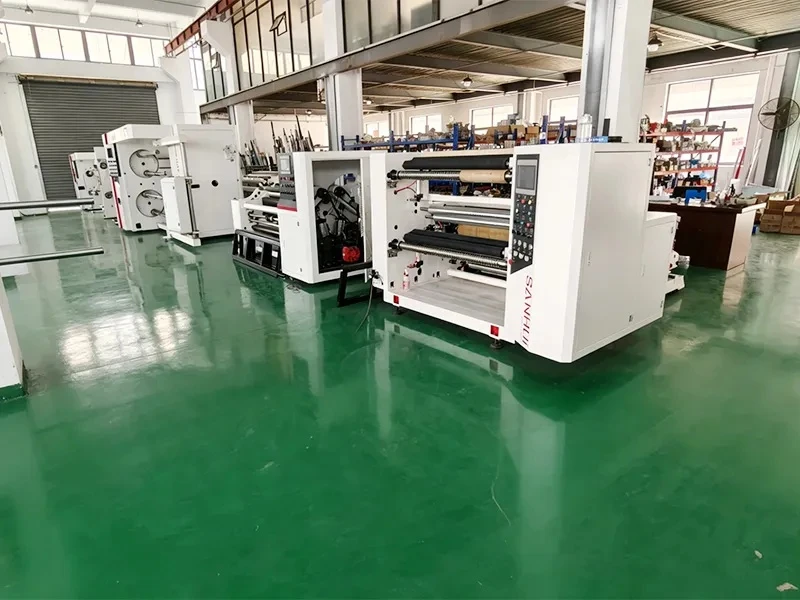
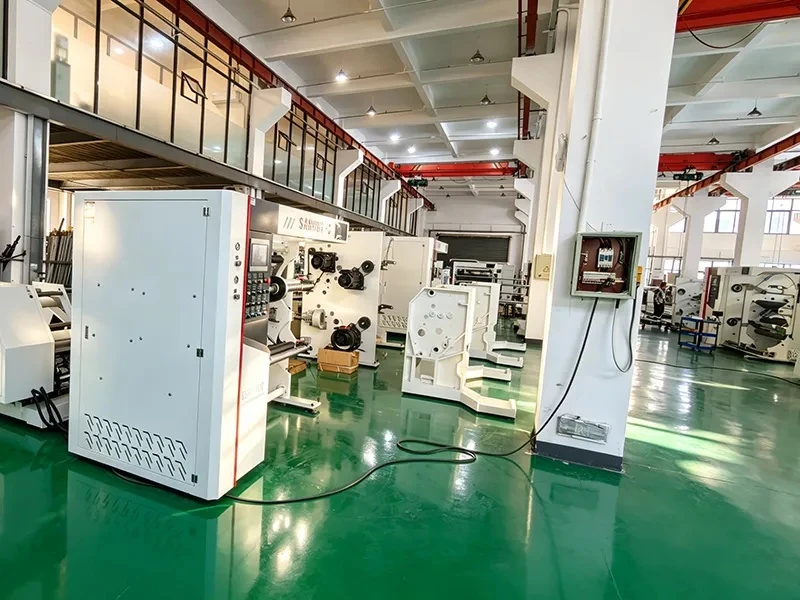
Sanhui Machinery brings over ten years of specialized expertise directly to your factory floor. We manufacture premium slitting equipment built with high rigidity bodies and intuitive PLC touch-screen interfaces. You can order custom machine widths to match your exact production goals. Our modern engineering stabilizes web control, protecting delicate packaging substrates throughout every shift. Investing in durable slitting equipment secures steady operational output and long-term financial returns.
Advanced machine features deliver continuous automation and labor reduction. You can select optional upgrades like automatic blade positioning and automatic roll changing. These automated systems decrease setup downtime between different production orders. Operators spend much less time adjusting blades by hand. Operating a fully automatic stretch film slitting machine boosts daily production while cutting labor overhead. Higher output significantly lowers operating costs across your packaging department.
Equipment Reliability, Warranties, and Aftermarket Support
Reliable machine equipment maintains top performance across demanding industrial operating environments. Strong structural frames prevent mechanical vibration during fast converting runs. Consequently, your film slitting machine runs smoothly without stretching flexible packaging film. Dependable operating parts minimize unexpected downtime, protecting your tight packaging delivery schedules.
Sanhui Machinery backs your factory operations with transparent service policies and direct global support.
|
Support Category |
Coverage Details |
|---|---|
|
Warranty Period |
1 year for whole machine; 2 years for core components |
|
Wear Parts Support |
Knives replace in 1–3 months; belts replace in 3–6 months |
|
Response Time |
7×24 technical support; on-site visits within 48 hours |
Our technical team provides complete export services, including international shipping, on-site setup, and practical operator training. You receive 7×24 remote guidance for any unexpected operational issue. Dispatch engineers arrive within 48 hours whenever you need hands-on technical assistance. Lifetime after-sales service ensures your stretch film slitting machine delivers consistent value for many years to come.
markdown
Finding the right film slitting machine means taking a close look at your factory needs. You have to handle flexible plastic, keep exact pull control, and pick the best roll winding settings. Choosing newer gear with smart features boosts your output and lowers your daily operating expenses.
Collect your exact technical details before asking companies for price quotes. Write down your main roll width, your biggest unwind and rewind sizes, and your target daily output speed. Preparing these precise details makes it much easier to pick the right machine for your shop.
Talk with the team at Sanhui Machinery right now. Send us your project details to set up a custom slitting test run for your materials. Our helpful staff will assist you in picking a stretch film slitting machine with accurate pull systems for your plant.
FAQ
What materials can you process with a stretch film slitting machine?
You can slice flexy plastic sheets like LLDPE, PE, PET, OPP, and PVC. This equipment cuts tough kraft paper, smooth coated paper, sticky labels, and aluminum foil with total ease.
What slitting accuracy can you expect from modern machinery?
New gear gives you super sharp cut accuracy within a tiny fraction of a millimeter. The roll ends stay extremely flat and smooth as they wind up. This neat work keeps the sheet from warping, so every finished roll looks totally even.
How do automatic roll change models compare in cost?
A machine that swaps rolls by itself costs about double what a basic model costs. However, it saves heaps of setup time and speeds up your total daily production. These huge time savings lower your labor costs over the long run.
What types of film slitting machines best fit high-volume output?
You can pick standard machines running at medium speeds or heavy-duty units that go twice as fast. Plants select tall vertical models or long flat options depending on roll size and available room.