How Does a Plastic Film Slitting Machine Work
A plastic film Slitting Machine cuts big rolls into smaller rolls. The smaller rolls are all the same size. The machine does this very carefully. It is important to know how this works if you work in packaging, farming, electronics, or making clothes. Sanhui Machinery helps your business cut rolls fast and correctly.
Key Takeaways
-
A plastic film slitting machine cuts big rolls into smaller rolls. It makes rolls that are the right size. This machine is important for packaging and textiles.
-
Good tension control is very important. It stops wrinkles and helps make smooth cuts. Always check the tension before you start the machine.
-
Using the correct blade for your material helps cut better. It also makes the cuts cleaner. Different blades are best for different materials.
-
Automation in Sanhui machines makes them faster and more accurate. It lets you change rolls quickly. It also means less work for people.
-
Regular maintenance and safety checks are very important. Make sure safety guards are on the machine. Clean the machine to keep it working well.
What Is a Plastic Film Slitting Machine
Definition and Purpose
A plastic film slitting machine helps you cut big rolls into smaller ones. This is very helpful in packaging. Sometimes, the master roll is too wide for your job. The machine slices it into thinner rolls. Each roll will be the width you need. This makes it easier to print, label, or wrap things. Using the right size rolls saves time and cuts down on waste.
Sanhui Machinery is a company that makes these machines. They have made slitting machines for many years. Their machines are known for being good quality. You can trust them to cut rolls well and quickly. Many businesses pick Sanhui Machinery because their machines work well and are simple to use.
Key Components
A plastic film slitting machine has many main parts. Each part does something important. The table below lists the main parts and what they do:
|
Component |
Role in Slitting Process |
|---|---|
|
Blade Assembly |
Cuts the film into the widths you need. Different blades work for different materials and jobs. |
|
Drive System Components |
Powers the machine. Motors, belts, and pulleys help the machine run smoothly. |
|
Tension Control Devices |
Keeps the film tight and steady. Load cells and dancers help make sure the film does not wrinkle or stretch. |
|
Rewinding Shafts |
Winds the cut film onto new rolls. This keeps the rolls neat and even. |
|
Electrical Components |
Controls the machine settings. Panels, sensors, and relays help you operate the machine safely. |
When you know about these parts, you can see how the machine works. All the parts must work together. This helps you get neat and correct cuts every time.
How a Plastic Film Slitting Machine Works
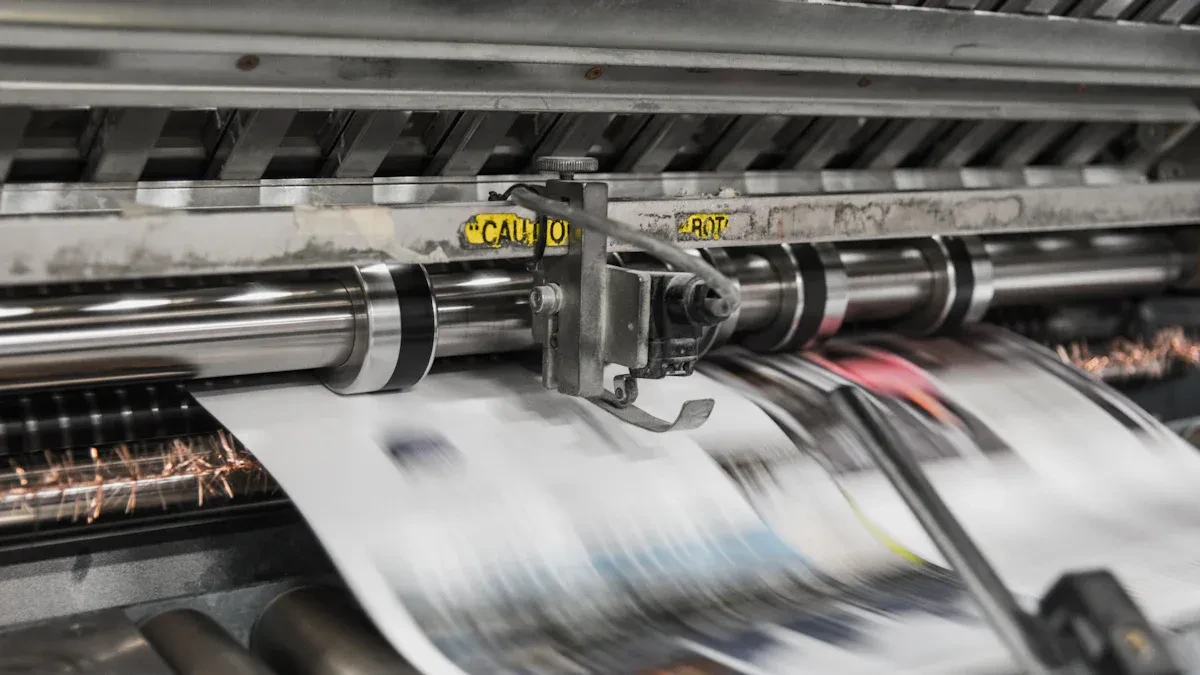
A plastic film slitting machine follows a clear step-by-step process to turn large rolls into smaller, precise rolls. You can see how each stage works together to give you high-quality results. Sanhui Machinery designs its slitter rewinder systems with advanced automation, so you get fast, accurate, and safe operation every time.
Unwinding and Tension Control
You start by placing the master roll onto the unwinding station. The slitter holds the roll tightly, so it does not slip or wobble. The machine feeds the film into the slitting line at a steady speed. Tension control systems keep the film tight but not too tight. If the film gets too loose, you might see wrinkles or uneven edges. If it is too tight, the film could tear. Sanhui Machinery uses sensors and feedback loops to watch the tension in real time. The system adjusts the tension automatically, so you always get smooth, flat film for cutting. This step is important because good tension control helps you avoid problems later in the slitting process.
Tip: Always check the tension settings before you start. Proper tension keeps your film flat and ready for accurate slitting.
Edge Alignment
Next, the slitter uses edge alignment technology to keep the film straight as it moves through the machine. You want the film edges to line up perfectly with the blades. If the film drifts or shifts, you might get rolls that are not the right width. Sanhui Machinery’s slitting machine uses sensors and guide rollers to watch the film edges. The system makes small adjustments to keep the film in the right place. This helps you avoid problems like uneven edges, burrs, or curling. If you use the right blade and keep the tension steady, you get clean, straight cuts every time.
-
Edge alignment also helps you deal with changes in temperature or stress on the film.
-
Laser measurement and optical inspection systems check the film position, so you meet quality standards.
Slitting Process
Now, the film reaches the heart of the plastic film slitting machine—the cutting section. Here, sharp blades slice the film into strips of the width you need. You can choose different types of blades for different jobs. Razor blades work well for thin films and tapes. Shear blades handle thicker materials like paper or cardboard. Crush blades are good for labels and very thin paper. The slitter lets you set the blade position and clearance, so you get the best cut for your material.
You control the slitting width, speed, and other settings on the operator panel. Sanhui Machinery’s slitter rewinder uses automation to keep everything running smoothly. The machine can reach speeds of 200 to 400 meters per minute or more. Real-time monitoring checks the blade position, film tension, and speed. This helps you keep the cuts accurate, even at high speeds. Automation also reduces manual work, so you save time and lower your labor costs.
Steps in the slitting process:
-
Check your work order for film type, width, and length.
-
Prepare the master roll and paper tubes.
-
Inspect the machine and blades.
-
Load the film onto the unwinding station.
-
Thread the film through the rollers and sensors.
-
Set up the slitting width, speed, and tension on the control panel.
-
Start the machine at a slow speed.
-
Watch the film edges and cut quality.
-
Increase speed when everything looks good.
-
Connect new film when the old roll runs out.
-
Remove finished rolls and label them.
-
Record your production data.
-
Clean the area and tools.
-
Handover to the next operator.
Rewinding
After cutting, the slitter rewinder collects the narrow strips onto new rolls. The rewinding system uses spindles and tension control to keep the rolls tight and even. You want each roll to have a flat, smooth end face. If the tension is wrong, you might see problems like telescoping rolls, crushed cores, or wrinkles. Sanhui Machinery’s slitting machine uses automatic tension adjustment and sensors to keep the rolls uniform. The system can also apply adhesive or heat to seal the roll ends, making sure they stay together.
-
The rewinding section checks for even tension and proper alignment.
-
Sensors watch for defects like overlapping or out-of-round rolls.
-
You can remove the finished rolls easily and prepare them for the next step in your process.
Note: Good rewinding prevents damage and keeps your finished rolls ready for printing, labeling, or packaging.
A plastic film slitting machine gives you control over every step, from unwinding to rewinding. You get precise, clean cuts and uniform rolls, thanks to advanced automation and smart design. Sanhui Machinery’s slitter helps you work faster, reduce waste, and deliver high-quality products every time.
Materials and Blades in Slitting Machines
Common Materials Processed
A slitting machine can cut many kinds of materials. Each material acts differently and needs special care. Here are some materials you might use:
-
Adhesive tapes: double-sided tape, masking tape, BOPP tape, foam tape, duct tape
-
Plastic films: PE film, PET film, PVC film, BOPP film
-
Paper: coated paper, label paper, cardboard paper, tissue paper, thermal paper
-
Non-woven fabrics: medical non-woven fabric, packaging non-woven fabric, filtration materials
-
Aluminum foil and laminates
You must know how each material reacts. Thin or slippery materials can move around easily. These need careful tension control. Thick and stiff materials, like paperboard, stay straight and are easier to cut. Stretchy plastics can change shape if pulled too hard. Brittle materials, like aluminum foil, can crack or fold if tension changes fast. Laminated materials can come apart if the pull is not steady. You want steady tension, smooth edges, and rolls that look the same. This helps you avoid mistakes and keeps your work easy.
Tip: Always check what material you have before you start. This helps you pick the right settings and blades.
Types of Slitting Blades
There are different blades for slitting machines. Each blade works best for certain materials and jobs. The table below shows the main types and what they do:
|
Slitting Method |
Application |
Performance Characteristics |
|---|---|---|
|
Shear Slitting |
Used for various materials, requires specific cutting angles and speeds |
Effective for precise cuts, influenced by knife speed and material thickness |
|
Crush Cutting |
Suitable for tough materials like rubber and laminates |
Uses brute force, can create dust with brittle materials, affects winding with elastic materials |
|
Razor Slitting |
Best for thin films and light foils |
Low tooling costs, limited by friction and heat generation, suitable for non-abrasive materials |
Picking the right blade helps your machine work better. You need to match the blade shape to the material. The right blade shape can save time and make cleaner cuts. For example, foils and metals need special blade shapes. The blade’s angle, sharp edge, and space between blades all matter.
-
The blade’s shape affects how close the cut is.
-
The sharp edge angle decides how much material is cut each time.
-
The space between blade teeth changes how well the machine cuts.
You get better results when you use the right blade for your material. This helps you make neat rolls and keeps your slitting machine working well.
Key Features of Sanhui Slitting-Machine
Automation and Precision
Sanhui slitting machines use smart automation. Automatic tension control keeps your material steady. This stops wrinkles and uneven cuts. The edge guiding system checks the film’s position. It makes small fixes without stopping the machine. Auto roll change lets you switch rolls fast. You do not need to pause production. The machine works at high speeds and still cuts precisely. You can set the width and speed on a touch screen. The system checks everything as it runs. This helps you get the right results every time.
|
Feature |
Benefit |
|---|---|
|
Automatic tension control |
Keeps material tight and flat for better quality and efficiency. |
|
Automatic edge guiding system |
Fixes film position automatically, reducing manual work. |
|
Auto roll change |
Lets you change rolls without stopping, saving time and boosting output. |
Safety and Maintenance
Sanhui cares about your safety. The machine has safety protection and emergency stop devices. You can work safely because it meets international standards. The parts are strong and last a long time. Cleaning and repairs are easy to do. The modular design lets you change parts quickly. This keeps downtime low and jobs on track.
|
Safety Mechanism |
Description |
|---|---|
|
Industrial Dust Collectors |
Collects dust and powder to keep your workspace clean. |
|
Fully/Semi-Enclosed Safety Guards |
Shields you from moving parts and meets CE safety standards. |
|
Emergency Stop Device |
Stops the machine right away if there is a problem. |
Tip: Always check the safety guards and emergency stop before you start the machine.
Application Versatility
You can use Sanhui slitting machines in many industries. The machine works with plastic films, paper, aluminum foil, and non-woven fabrics. You can cut materials for packaging, printing, labeling, and electronics. The machine handles both small and large rolls. You can change settings for different jobs. This flexibility helps you meet customer needs. You get reliable performance for every slitting task.
You can get accurate cuts if you follow each step. Start with unwinding and finish with rewinding. Sanhui Machinery uses smart automation to help you work fast. The machine keeps you safe and gives you good results. When picking a slitting machine, think about these things:
|
Key Factor |
Description |
|---|---|
|
Blade Material Selection |
Choose the right blade for your film and thickness |
|
Tension Control |
Makes rolls smooth and stops mistakes |
|
Automation Level |
Helps you work faster and do less by hand |
Sanhui cares about making good machines and new ideas. This helps you reach your goals at work. You get accurate cuts, can do many jobs, and save money every time.
FAQ
How do you choose the right slitting blade?
First, look at your material type and thickness. Razor blades are good for thin films. Shear blades cut thicker materials easily. Crush blades are used for tough jobs. If you are not sure, ask Sanhui Machinery for help.
What materials can you process with Sanhui slitting machines?
You can use Sanhui machines for plastic films, paper, aluminum foil, adhesive tapes, and non-woven fabrics. These machines work for packaging, printing, and labeling jobs.
How does automatic tension control help you?
Automatic tension control keeps your film flat and tight. It stops wrinkles, stretching, and uneven cuts. This feature makes your product better and saves time.
Is it easy to maintain a Sanhui slitting machine?
You need to clean the machine often. The modular design lets you change parts fast. Always check safety guards and blades before using it. Sanhui gives support and training for maintenance.