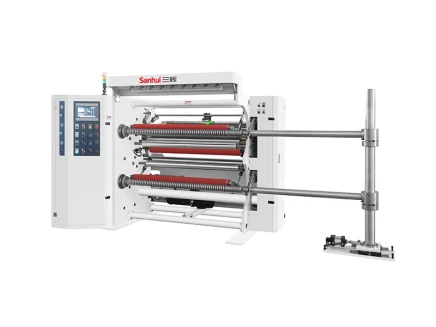
Benchtop Slitting Machine for Battery R&D 10 Selection Criteria
You must check small lab tools very carefully. Look at edge quality, frame strength, and cleanliness. You handle each foil carefully during cell making. Choosing the right benchtop Slitting Machine protects battery reliability. Good cuts stop small shorts. They also stop edge damage after coating.
Your slot-die coating line makes delicate layers. Bad cuts ruin this smooth coating surface. They also drop loose dust. Sanhui Machinery offers solid engineering for labs. You get great tension control. You get burr-free edges on fragile sheets. This happens through precise slitting in modern labs.
Key Takeaways
-
Dual-rotary shear knives make clean cuts. They keep electrode edges intact.
-
Tiny burrs under 10 micrometers stop bad battery shorts.
-
Auto tension controls stop web wrinkles. They protect delicate coatings.
-
Small machine builds fit nicely into clean spaces. They also fit well inside gloveboxes.
-
Vacuum particle extraction systems catch dust. This helps keep cleanroom quality high.
Slitting Precision and Burr Height

You must control physical defects on each roll. Good material sizing protects delicate battery parts. It stops internal structural failures.
Shear Cutting vs Razor Mechanics
Standard razor blades struggle with rough slurry layers. Single-edge blades drag through thick slurry. They create uneven foil edges. They cause micro-fractures along dense slurry lines. They ruin edge thickness uniformity. Razor slitting also pulls brittle foil particles off. Loose particles create contamination hazards in clean rooms.
Dual-rotary shear knives use two circular blades. They bite foil cleanly. Shear cutting applies balanced pressure to both sides. This clean action preserves slurry adhesion. Active electrode edges stay intact. You keep stable electrode strength. Brittle material layers will not crack. Proper mechanical cutting creates clean edges. It reduces stress along every coated line.
Micro-Burr Height Tolerances
Burr heights over 10 μm are dangerous. Sharp metal edges puncture thin separator films. This happens during battery winding or stacking. Punctured separators cause micro-short circuits. They cause heat damage and pouch expansion. You prevent failures by controlling burrs early.
Burr heights over 10 μm increase separator punctures. They cause micro-short circuits in battery cells.
Sanhui Machinery installs rigid cutter sets into tools. These strong cutter bodies keep ±0.1mm accuracy. They work on every electrode web pass. Stable cutter positioning prevents blade vibration. It gives flat rewinding within ≤0.5mm tolerances. You make clean rolls with precise edges. This protects winding machines from alignment errors.
Blade Material and Edge Longevity
You need strong tools. Tough battery chemicals wear them out. Normal steel dulls fast on thick materials. Good knife choices protect edge shapes.
Tungsten Carbide Knife Durability
Tungsten carbide stops harsh wear. LFP slurry is very abrasive. Soft steel dulls quick on tough slurry. Dense carbide stops fast metal loss.
This strong material helps tools last. They last 3 to 5 times longer. Sharp edges keep slitting smooth every time. Stable shapes save delicate cathode coating layers. Good tools stop web contamination.
Blade Alignment and Wear Rate
Bad alignment creates uneven cutting pressure. Misaligned tools push hard on small spots. Uneven force strains the knife edge. Fast wear ruins blade sharpness quickly. Keep cutter shafts parallel always:
-
Variable Gap Distance: Off-center shafts create uneven web gaps. One side gets loose. The other side stays tight.
-
Asymmetric Wear: Heavy wear damages one blade side. The other side stays fine. This ruins the cutting edge early.
|
Wear Indicator / Pattern |
Cause / Impact on Edge Wear Rate |
|---|---|
|
Crosshatch surface patterns |
Bad alignment ruins straight cutting lines. It causes abnormal wear. |
|
Edge beveling irregularities |
Uneven force changes edge wear patterns. |
|
Stress marks near attachment points |
Bad mounting adds stress. It speeds up wear. |
Check wear patterns often. Good mounting stops foil damage. Proper alignment protects foil coatings. Correct positioning stops slurry peeling. High precision makes even strips.
Tension Control Systems
Closed-Loop Automatic Tension Control
You must control web tension carefully. Pulling too hard stretches soft foils. Stretching breaks thin coating layers. Thick slurry peels off the foil. Loose foil causes bad rewind rolls. It also ruins fine material edges.
Auto systems track pull force continuously. Sensors measure live web feedback quickly. The controller adjusts motor torque instantly. This keeps thickness even on strips. Constant tension protects delicate coating layers. It ensures reliable battery performance.
Web Deflection and Wrinkle Prevention
Web bending creates bad diagonal wrinkles. Uneven pressure ruins smooth roll tracking. Wrinkles damage prior coating layers. Thick slurry buckles under bad tension. Stretched foil ruins uniform coating thickness. Straight rollers stop all web distortion.
Straight web alignment stops edge buckling. It protects fragile battery materials well.
Sanhui machines use EPC edge correctors. This device keeps the web straight. Optical sensors spot small web drifts. Steering rollers realign the foil quickly. Smooth tracking stops bad edge folds. It protects delicate cathode coating rolls. It protects your anode coating rolls. Gentle handling saves dried slurry layers. Clean processing stops expensive material waste.
Slitting Speed and Automation Level
You must balance speed and quality. High speed helps labs work faster. Fast speeds cause web flutter. Flutter ruins delicate foils.
Variable Speed Control Options
Different steps need different speeds. Sensitive slurry needs slow acceleration. Speed control stops broken foils. You change speeds for cell designs.
|
Machine Model |
Target Application |
Slitting Speed Range |
|---|---|---|
|
TOB-MSK-300 |
Coin and small pouch cell preparation |
0 to 4 m/min (adjustable) |
|
TOB-DYG-110A |
R&D lab and pilot-scale production |
Up to 10 m/min (adjustable) |
Slow speeds save experimental coating runs. You process thick web samples easily. Slow movement helps operators see cuts. Run machines at 80% max speed.
Sanhui Machinery Automation Capabilities
Modern lab tools use smart controllers. Touchscreens show real-time tension data. Operators change settings with saved recipes. Smart controls prevent user mistakes daily.
Sanhui Machinery adds automatic edge correctors. These tools keep coated webs straight. Auto tension systems handle slurry changes. Constant pull stops cathode coating tears.
Smart systems speed up foil changes. Auto blade setups save setup time. The system protects anode coating edges. Good tracking stops cathode coating wrinkles. Precise automation gives repeatable results. High efficiency speeds up battery testing.
markdown
Benchtop Slitting Machine Lab Footprint
Plan lab space wisely for cell setup. Small labs face tight space limits. A benchtop slitting machine cuts with high precision. It saves valuable counter space. Compact machinery lets you place equipment nearby. This stops workspace overcrowding.
Compact Benchtop Slitting Machine Dimensions
Install a benchtop slitting machine on workbenches easily. Its small footprint replaces huge floor space. Place units next to processing equipment. This setup builds continuous workflow efficiency. The rigid frame keeps components aligned inside.
This compact physical layout simplifies daily operations. Operators reach control panel buttons very easily. You access cutter sets for fast cleaning. Proper spacing prevents accidental material contact. It protects fragile slurry coating surfaces well.
Dry Room and Glovebox Integration
Control humidity when handling sensitive chemistries. Lithium-ion materials degrade fast in water vapor. Water vapor ruins exposed active mass quickly. Placing tools in dry rooms protects coatings. Small footprints minimize clean chamber airflow disruption.
Some research needs inert argon atmospheres inside gloveboxes. Transfer small processing units through airlocks easily. You never disassemble structural frames during transfer. The equipment operates smoothly inside sealed enclosures. It does not generate excessive heat inside. Smooth surfaces stop active powder accumulation completely. This protects solid-state electrolyte coating layers well.
Maintain high safety levels inside vacuum environments. Use sealed motorized parts inside the tool. Non-outgassing components stop volatile chemical contamination. Protecting anode coating layers ensures long life. Your finished test cells last much longer.
Material Versatility in Battery Research
You process many materials in battery research. Delicate handling protects thin copper and aluminum foils. Harsh pressure cracks brittle slurry layers easily. Custom knife shapes solve these tough handling problems.
Adjustable blade pressure protects weak web edges. You stop edge tears on sensitive electrode materials. Proper tuning keeps optimal thickness uniform on strips.
Anode and Cathode Foil Handling
Slice thin foils without ruining active slurry coatings. Bad pressure flakes delicate slurry off current collectors. Dual-rotary shear knives balance cutting forces well.
Dried slurry forms a very porous structure. High cutter alignment stops micro-cracks along edges. Gentle cutting holds slurry tight to preserve electrodes.
Compatibility with Upstream Battery Electrode Coating Machine
A benchtop slitter handles web rolls directly. Your slot-die coater puts uniform slurry on collectors. Slot-die coating systems need precise slitting cuts.
Coating Process Flow:
[Slot-Die Coater] -> [Electrode Calendering Machine] -> [Benchtop Slitting Machine]
Your battery electrode coating machine makes long strips. An electrode calendering machine compresses webs for density. Slot-die units need exact thickness uniformity first.
Feed slot-die rolls into cutter sets smoothly. Benchtop units take slot-die webs without wrinkles. Your battery electrode coating machine pairs with slitters. This setup protects delicate slurry boundaries very well.
Solid-State Electrolyte Sheet Slitting
Solid-state sheets do not have metal backings. Standard razor slitting crumbles brittle electrolyte coatings. Precision shear cutting saves weak solid-state layers.
Set small knife gaps for dense solid-state sheets. Controlled cut depth stops chipping on fragile layers. Smooth feeding through slot-die lines helps assembly. Your battery electrode coating machine delivers clean edges.
Slitting Width Adjustability
Minimum Slitting Width Options
You need flexible width settings. Custom battery formats require exact sizes. Research needs narrow lanes. Coin cells use small lanes. Pouch cells also need them. Compact units cut wide rolls. They make uniform lanes fast. Sanhui Machinery cuts 10mm widths. Uncoated edges need exact cutters. Dense slurry zones need them too. This small width helps trials. You process coated samples easily. Raw substrates are expensive. Do not waste precious substrates. Precise width adjustments help researchers. They test new formulations fast.
Thick slurry changes foil behavior. Upstream slot-die coaters apply material. Slurry goes on thin sheets. Heavy loading creates rough edges. Outer foil borders get uneven. Operators trim these margins fast. Trim them before cell assembly. Precise cutters find smooth regions. Protect fragile electrode margins well. Stop micro-cracking and high stress. Prevent material delamination immediately. Clean edges keep thickness even. Every finished strip stays uniform.
Quick-Change Cutter Setups
New research needs width changes. Manual alignment wastes lab time. Modular assemblies simplify width adjustments. Technicians swap spacers very fast. They change output lane sizes. Brittle slurry needs clean shear cutting. Clean cuts stop edge flaking. Smart mounting keeps cutters aligned. Alignment stays true every run. Spacing sleeves stop blade wobble. They eliminate costly positioning mistakes. Maintain high coating integrity always. Keep quality high during transitions.
Proper spacers keep pressure even. Pressure stays uniform across webs. Sharp knives shear slurry cleanly. They do not tear aluminum. They do not tear copper. Set precise knife gaps easily. Cathode coating lanes need them. Fast setups prevent structural damage. They protect anode coating layers. This efficient system keeps quality high. You process materials faster now. Work speeds up after coating.
markdown
Dust and Particulate Control
Vacuum Particle Extraction Systems
Cutting sheets creates tiny dust. Soft slurry breaks easily. Dry dust drifts fast. You must catch this dust. Small vacuums pull dust away. Tightly placed nozzles sit nearby. Strong suction catches small particles. High airflow clears dust fast.
Effective dust extraction systems use dedicated engineering features to maintain web cleanliness:
-
Targeted Capture at the Source: Small hoods catch dust instantly.
-
Contamination Prevention: The system stops floating dust.
Cleanroom Contamination Prevention
Clean labs need low dust. Loose dust ruins coatings. Dust causes dangerous short circuits. Contain all dust safely. Smooth covers stop dust buildup. Stainless steel helps clean machines. Sealed parts stop dust motion. Covered spaces block outside dust.
Friction makes loose dust fall. Dust breaks off the collector. Floating dust ruins cathode coating lines. It harms anode coating quality. Vacuum tools protect your slurry coating. Clean edges stop separator damage. Constant suction keeps areas safe. Clean rolls reduce rejected cells. You get clean electrode rolls.
Maintenance and Cleaning Convenience
Modular Component Accessibility
Clean your machine often during daily experiments. Modular design gives easy access to internal cutters. Technicians unbolt parts fast using standard tools. Quick-release locks let you remove knife shafts. This easy design saves setup time. Inspect circular blades without disassembling the frame. Operators clear slurry residues before they harden. Keep all tools organized on nearby benches.
Modular layouts simplify routine maintenance for workers. Pull out web guide rollers for inspections. Smooth anodized rollers stop coating sticking. This easy layout protects fragile web edges. Remove trapped dried slurry using microfiber cloths. Clean paths guarantee precise web movement. Operators save time during daily cleaning.
Solvent Resistance and Residue Removal
Harsh chemicals ruin low-grade parts during wipes. Research labs use NMP to dissolve binders. NMP easily wipes tough coating off stainless steel. Non-corrosive metals resist harsh liquid damage. Scrub cutter blades safely without dulling edges. This solvent resistance removes cathode slurry deposits. Preserve tool edges while protecting coating layers. Durability protects your equipment investment long term.
Sealed housings stop liquid penetration during cleaning. Apply cleaning agents to remove slurry buildup. Stainless steel panels prevent chemical discoloration. Maintain pristine working environments for electrode rolls. Clean equipment ensures uniform coating quality. This cleaning process prepares your machine fast. Regular care extends tool life significantly.
Safety Standards and Certifications
Fast spinning blades are dangerous. Protect your workers from sharp edges. Modern benchtop machines have strong safety features.
Operator Interlocks and Emergency Stops
Sharp circular knives can hurt hands. You need safety interlocks on machines. Switches cut power when covers open. Blades stop before you touch rollers.
Big red emergency buttons sit out front. Press them fast if foils jam. Quick stops prevent bad material wraps. Fast shutdowns save cathode coating rolls. These switches keep lab workers safe.
CE Compliance and Structural Rigidity
CE marks prove machines follow rules. Certified tools reduce electrical dangers in labs. Sealed boxes shield wiring from harsh chemicals. Grounded metal stops static sparks near slurry.
Rigid frames stop heavy tool shaking. Steel bodies stop frame bending completely. Small movements protect anode coating edges. Sanhui Machinery builds solid frames to stop flexing. Stable blades protect solid-state coating layers. Strong frames stop bad web chatter. Good stability protects slot-die coating lines. Get burr-free cuts on slurry coating projects.
Pick the right benchtop slitting machine. You must check key performance features.
High accuracy stops small shorts. Good tension control stops defects. Dust systems protect every electrode edge.
Clean cuts save smooth layers. Your slot-die coater spreads active slurry evenly.
A modern machine keeps coating thickness even. You protect sensitive foil collectors.
Sanhui Machinery makes tools for lab work. Test your material cuts first. Check edge coating quality under microscopy.
markdown
FAQ
Why does exact slitting matter after coating?
A coater puts active slurry on metal foils. You move these webs using a coating machine. Exact cuts protect slurry edge quality. They keep thickness even across every strip.
How do you stop burrs on electrode foils?
Use rotary shear blades instead of razor knives. Shear blades cut double-sided sheets cleanly. They cut well without tearing fragile coating layers. This cutting stops loose slurry dust. It protects overall coating quality. Burr heights stay under 10 μm.
Can a small slitter handle delicate layers?
Yes. You feed coated webs into a slitting machine. Shear cutters handle fragile slurry boundaries well. They cut without cracking brittle surfaces. They preserve slurry adhesion.
How does slitting help upstream coating work?
Your coating machine makes continuous slot-die lanes. Sharp cutters align with each boundary cleanly. Correct knife pressure protects delicate electrode margins. It preserves active slurry coating quality during work.