



What Is a Nonwoven Slitter Rewinder Machine and How It Works?
A slitter rewinder for nonwoven material works very well. This special machine changes big rolls into small rolls. It packs the fabric tight inside the new rolls. The machine handles soft non-woven webs with great care. It does not stretch weak fibers while it works.
The main slitter unit cuts wide rolls into strips. Blades make smooth and exact cuts in the material. Then, the dual shaft rewinder rolls the thin strips. They wrap neatly onto paper cores with steady tension. You can make materials for hygiene and medical supplies. It also makes air filtration media and commercial wipes.
Key Takeaways
-
Nonwoven slitter rewinders change big rolls to small rolls. They do not stretch soft fibers.
-
The machine uses three steps. It unwinds, cuts, and rewinds.
-
Special cutting methods make smooth edges. They stop fraying.
-
Smart systems stop fabric wrinkles. They stop static and crushing.
-
Fast automatic machines boost factory output. They keep accurate cuts.
What Is a Nonwoven Slitter Rewinder Machine?
Definition and Primary Purpose
This machine turns big rolls into small rolls. It works fast and stays very safe. It cuts weak, stretchy fabrics without any harm. Paper machines handle hard, thick sheets instead. Porous fabrics need careful control to stay neat. This process protects soft fabric edges very well.
|
Parameter / Feature |
Nonwoven Converting |
Standard Paper Processing |
|---|---|---|
|
Material Structure |
Soft fibers with tiny holes |
Smooth, solid, hard sheet |
|
Tension Management |
Soft pull stops fabric stretching |
Strong pull for hard sheets |
|
Cutting Precision |
Special tools stop edge fuzz |
Basic sharp blades for cutting |
Paper machines pull hard on tough paper rolls. Soft fabric needs gentle care to stop damage. Strong pulling creates bad wrinkles and crushed cores. You get great rolls with soft surface winding. Fast machines check the fabric path every second. You set light press pressure on soft cores.
Core Mechanical Components
You match fabric speed to keep lines straight. You watch four main machine parts during work:
-
Unwind stand: Holds big rolls while smooth brakes control speed.
-
Web guidance: Uses sound sensors to fix fabric alignment fast.
-
Slitting assembly: Cuts wide fabric into strips with sharp knives.
-
Rewind station: Rolls small strips onto paper tubes with care.
A strong steel body keeps this machine steady. Heavy supply rolls make the frame shake hard. Thick steel bases stop all bad machine flexing. Sanhui Machinery builds solid steel frames for safety. Sanhui Machinery makes small, strong machines that last long. This unit runs well during long work days. Heavy steel frames stop shaking and save accuracy.
Film machines use 800 mm unwinds and 450 mm rewinds. Paper units use 1200 mm unwinds and 800 mm rewinds. Large gantry units take big rolls over 1000 mm.
Sharp blades cut wide fabric rolls very clean. Good blade setups stop ugly fuzzy fabric edges. You adjust sharp knives to make neat cuts. Two winding shafts roll thin strips on tubes. Precise pull controls keep roll sides very flat. Center-surface winders protect soft inner fabric layers.
You keep roll tightness steady from start to finish. Shear knives cut wide, soft fabric lines well. Sound waves cut edges and stop loose threads. Good machine setups stop crushed rolls and waste. Smart design improves quality and stops bad roll trash.
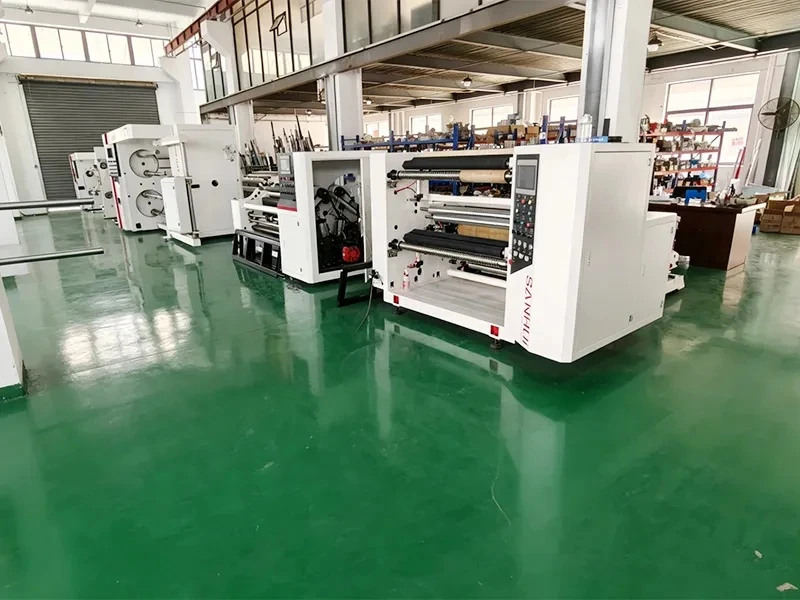
How a Slitter Rewinder for Nonwoven Materials Works
Big machines turn wide master rolls into small rolls. They use three clear steps to do this. You need these smart steps for soft web materials. They cut clean without stretching fragile fibers.
-
Unwinding: The machine feeds raw material into the line. It keeps steady web tension at all times.
-
Slitting: Special knives slice the moving web into thin strips.
-
Rewinding: Winding shafts wrap the slitted ribbons onto cores. They use light, controlled pressure for each core.
Controlled Unwinding Stage
You load a big master roll onto the stand. The roll gets smaller as it feeds material. Unchecked brakes cause a fast tension spike. This rising pull stretches fibers and creates bad wrinkles.
|
Component Category |
Utilized Technologies |
|---|---|
|
Tension Sensors & Control |
• Closed-loop load cell transducers |
|
Brake Systems |
• Pneumatic brakes |
A slitter rewinder for nonwoven adjusts brake torque. This action keeps tension very steady. Sanhui Machinery installs full-automatic closed-loop systems on every unit. These systems stop all web sagging. Web guides move the fabric path continuously. Smart sensors fix bad alignment before blades make cuts.
Precision Slitting Section
The web moves into the slitting station next. You use special knives to cut wide streams. Soft fabrics need gentle blade contact. A paper slitter and rewinder uses heavy force instead.
-
Overlap depth: Set circular blades between 0.75–1.0 mm for clean web separation.
-
Cant angle: Angle top knives between ~0.75–1.0° to stop fuzzy edges.
-
Axial runout: Limit sideways blade wobble to ~0.002 in max (TIR).
-
Radial runout: Limit vertical blade bounce to ~0.004 in max (TIR).
Good knife setups give exact accuracy to ±0.1mm. High precision cuts stop fiber fraying along edges. A dedicated unit protects delicate web structures. A rigid paper slitter and rewinder crushes soft surfaces. You get smooth material lines during long work runs.
Consistent spring pressure keeps blade contact stable during fast rotation. This step stops web tearing and periodic defects.
Uniform Rewinding Process
Slitted ribbons travel onto separate winding shafts next. Controlled speed guides narrow strips onto paper tubes smoothly. Precise web control stops crushed cores and loose layers.
Finished rolls have smooth end faces with flatness ≤0.5mm. Sanhui Machinery builds every slitter rewinder for nonwoven work well. Advanced drive motors reach high speeds up to 800m/min. This fast performance boosts your daily output a lot. Efficient rewinding creates firm rolls for safe shipping.
Choosing an automated slitter boosts overall converting efficiency. This gear protects delicate material while raising total output.
Nonwoven Slitting Methods and Edge Quality
Shear and Score Cutting
You pick shear or score cutting for goals. Shear cutting uses two round blades. They act like sharp scissors. You get exact, smooth cuts. Edges stay free of dust. Pick shear cutting for big jobs. This method cuts very clean. It never pulls fibers apart.
Score cutting presses one round blade. It hits a hard roller. Edges get a bit squished. Yet, this stops fabric tears. The blade crushes the line. Soft web slitters use light pull. An automatic rewinder rolls strips neatly.
|
Slitting Method |
Edge Quality Characteristics |
|---|---|
|
Shear Cutting |
Makes smooth, very exact, dust-free edges. |
|
Score Cutting |
Makes slightly squished edges, but stops tears. |
|
Ultrasonic Slitting |
Makes super clean, sealed edges with no mess. |
Ultrasonic Slitting Technology
Ultrasonic tools seal synthetic edges well. Fast shaking creates warm friction. This heat melts synthetic fibers together. The edge seals right away. No heat damage happens. You stop messy edge fraying. This tool replaces old hot wires.
Plastic fibers work great with ultrasonics. You cut polypropylene and nylon easily. Special slitter rewinders protect weak fabrics. The machine stays very steady. It makes perfect cuts every time. Paper units lack edge sealing. Good roll slitters keep quality high.
Solving Web Control Challenges with Sanhui Machinery
Managing Tension and Compressibility
Soft fabrics are tricky to process quickly.
Fibers fray easily.
Loose dust floats across your floor.
Fabric crushes if pull strength rises.
Unchecked webs cause bad, uneven rolls.
You need accurate web control today.
Smart settings fix hard fabric issues.
Adjust tension to stop static charge.
Adjust speed to protect soft layers.
Vacuums suck up loose fiber dust.
These steps keep machines very clean.
Paper units lack these special controls.
|
Solution Strategy |
Working Mechanism |
Operational Benefit |
|---|---|---|
|
Process Parameter Tuning |
Adjusts line tension, humidity, and slitter speed |
Prevents static buildup and fiber damage |
|
Centralized Vacuum Collection |
Uses localized hoods near cutting blades |
Captures airborne fiber dust instantly |
Sanhui Machinery Slitter Rewinder Solutions
Sanhui Machinery builds custom machines for you.
Touch screens show tension data instantly.
Auto roll changes cut waste fast.
Modular parts make quick maintenance easy.
These smart systems stop material waste.
Special nonwoven slitters ensure top quality.
This fast machine reaches 800m/min smoothly.
It keeps full web stability always.
Blade cuts stay precise within ±0.1mm.
Gentle winding protects soft fabric layers.
Finished rolls stay flat under 0.5mm.
Paper units crush soft web layers.
Sanhui machines boost your plant output.
This reliable gear protects soft fibers.
Buy a dedicated slitter today.
Smart controls and sharp blades make great rolls.
Auto systems keep web pull steady.
Knives cut clean edges without fabric damage.
Good blades stop fiber fraying.
A reliable slitter boosts your output fast.
Sanhui Machinery builds great custom machines.
Fast units run up to 800m/min easily.
You cut waste and raise plant output.
A strong rewinder ensures top roll quality.
New slitters improve long-term factory success.
FAQ
How does this guide aid your choice?
It shows key accuracy levels. You cut soft rolls to ±0.1mm. Finished roll ends stay flat under 0.5mm.
How fast can this machine run?
Top models run up to 800m/min. Safe work uses most full speed. Smart pull controls stop fabric stretch.
How do two shafts save quality?
Two shafts keep pull strength smooth. You stop crushed cores and wrinkles. Smart gear turns out tight rolls.
Why read a guide before buying?
A full guide explains key details. You see roll sizes and warranties. This info helps you pick best.


